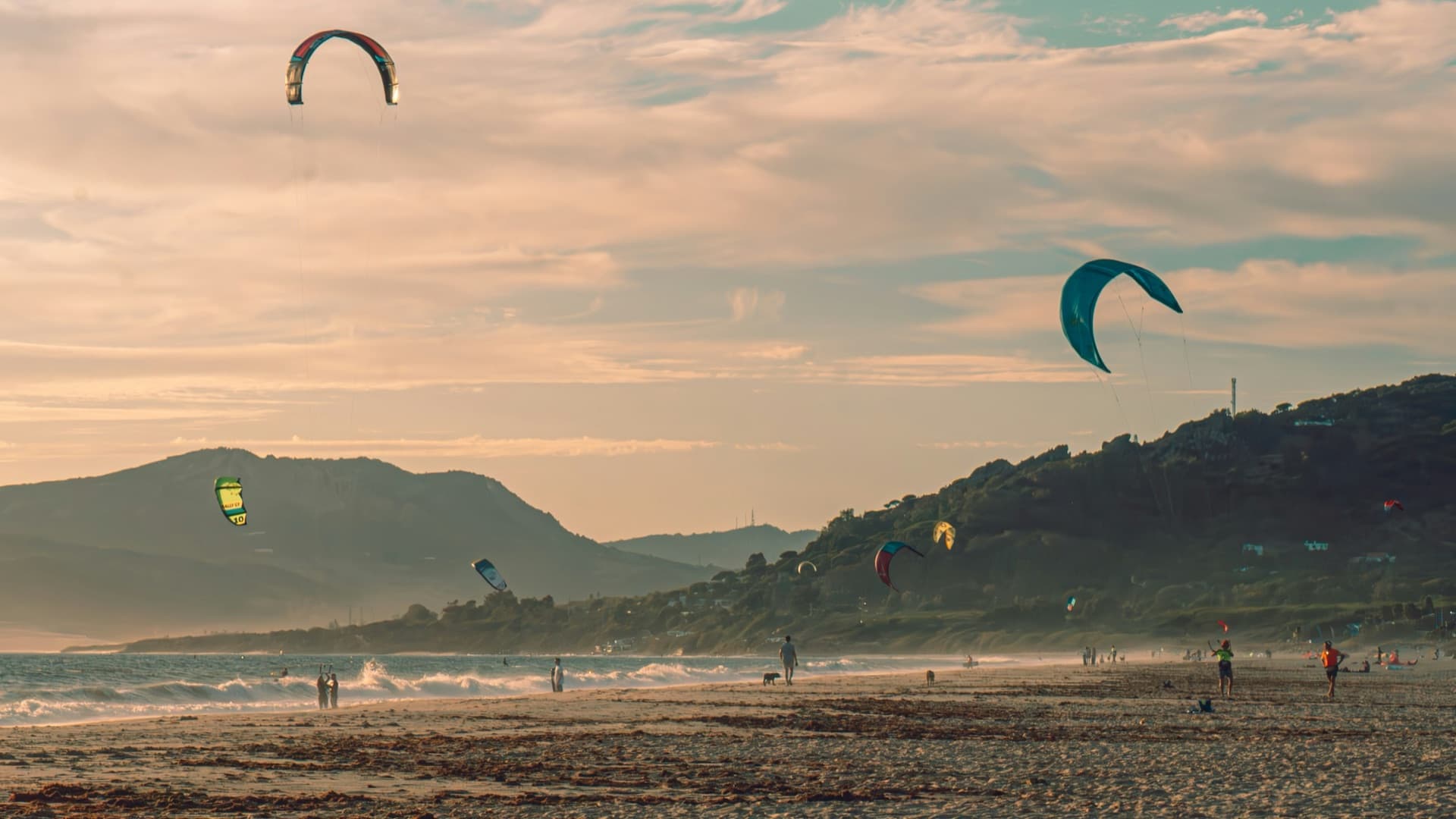
Tarifa sits at the southern tip of Spain, where the Atlantic squeezes into the Mediterranean through the Strait of Gibraltar. Mountains rise on both sides of that gap, and when air is forced through it the wind accelerates, the same venturi effect that funnels through a kitesurfer's own kite. That geography is why Tarifa earns its nickname as the wind capital of Europe, and why it works when the rest of the continent is glassy.
The two winds: Levante and Poniente
Almost everything in Tarifa comes down to which of two winds is blowing.
Levante is the easterly. It arrives hot and dry off the Mediterranean and the Sahara, gets squeezed and thermally reinforced through the Strait, and is the wind that makes Tarifa famous. It is strong, gusty, and relentless (25 to 40 knots is a normal Levante), and it builds short, steep chop close to shore. It is also side-to-slightly-offshore at the town beaches, so it demands respect and a bit of experience.
Poniente is the westerly, straight off the Atlantic. It is cleaner and steadier than Levante, usually a touch lighter, and it brings cooler air, better visibility, and proper ocean swell to the outside beaches. It is the more forgiving of the two and tends to blow more onshore, which makes it the friendlier option for newer riders.
A good week in Tarifa often alternates between the two. Learning to read which one is forecast, and how hard, matters more here than almost anywhere else.
When to go
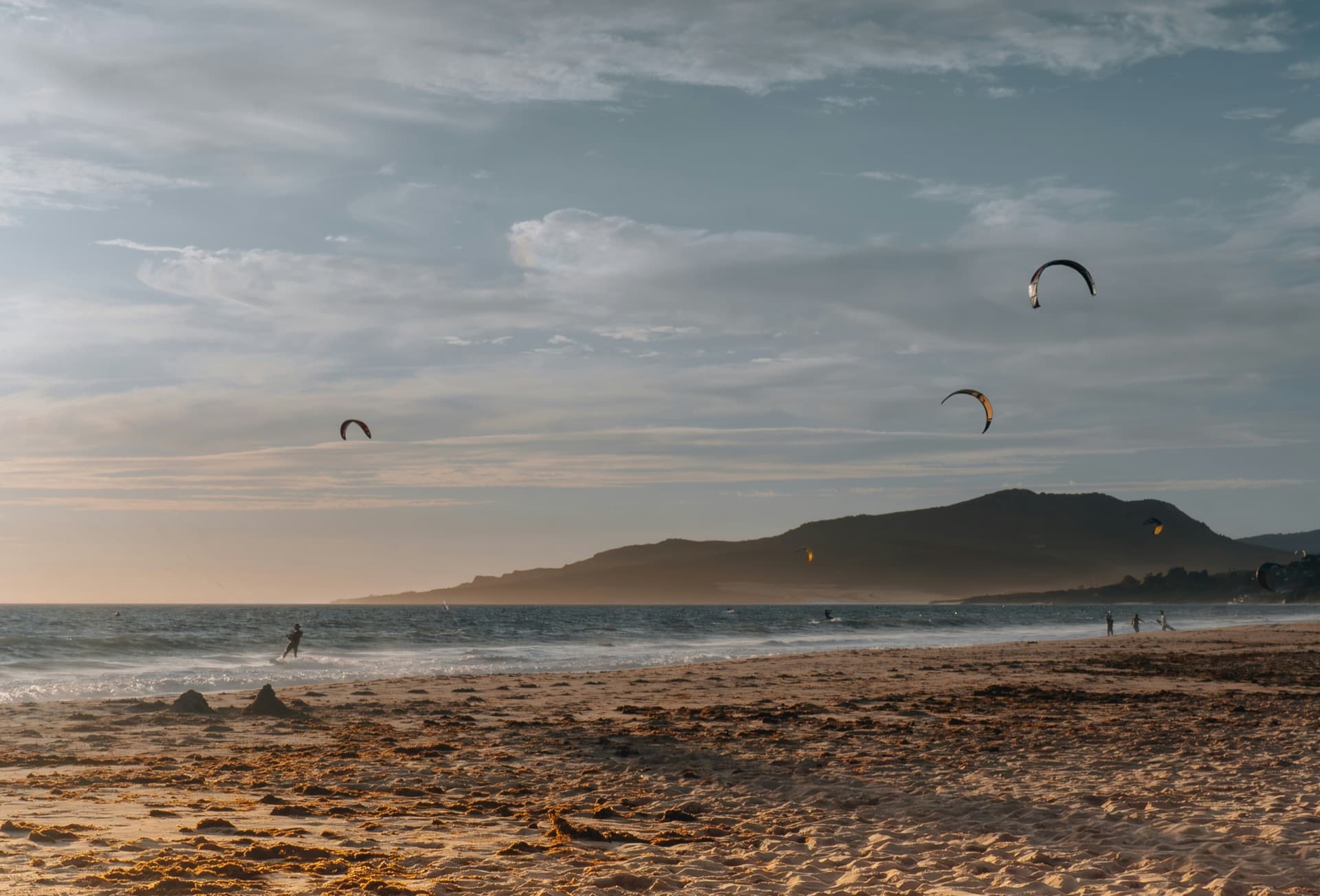
Tarifa is rideable year-round, but the season has a clear shape:
- July and August bring the most frequent and strongest Levante, the warmest water, and wall-to-wall sunshine. They also bring the crowds: packed launches, full car parks before 10am, and peak prices. The wind can be genuinely exhausting in midsummer.
- June and September are the sweet spot. You still get strong, reliable wind and warm water, but with noticeably fewer people. If you can choose, choose these.
- April, May and October are quieter shoulder months: plenty of wind, cooler air, low-season prices.
- November to March is for the committed: more Poniente and Atlantic fronts, colder water, the odd flat spell, but cheap and uncrowded.
Water runs from around 16°C in winter to about 22°C in late summer, so pack a 4/3 wetsuit for the shoulder seasons and a shorty or 3/2 for the peak.
Which beach
The wind is the same up and down the coast, but the beaches are not:
- Los Lances is the long town beach: shallow, sandy, and the flattest water around. It is the progression and beginner zone, and where most schools run.
- Balneario sits at the town end of Los Lances, handy if you are staying in Tarifa itself.
- Valdevaqueros is the postcard spot, about ten kilometres west. The bay opens wide, the launch is huge, and it picks up clean swell on Poniente and steep chop on a hard Levante. It is the heart of the scene.
- Punta Paloma is next door, backed by dunes, with a shallow lagoon at low tide, beautiful and a little less hectic.
- Bolonia is the wave option: when Poniente fires it turns into a genuine Atlantic swell spot for the more advanced.
Before you go
Fly into Gibraltar (45 minutes), Jerez (1 hour, often cheapest), Málaga (1.5 hours, the big hub) or Seville (2 hours), and rent a car: the beaches stretch fifteen kilometres and you will want to chase the wind between them. On strong Levante days the busy beaches run rescue boats; on side-offshore winds, ride where there is cover and do not go out underpowered.
The verdict: target June or September for the best balance of wind, warmth and space. And before you book, watch the live Tarifa forecast: our Masterforecast is calibrated specifically for the Strait, so the number you see reflects what Levante actually does on the beach rather than the raw model.