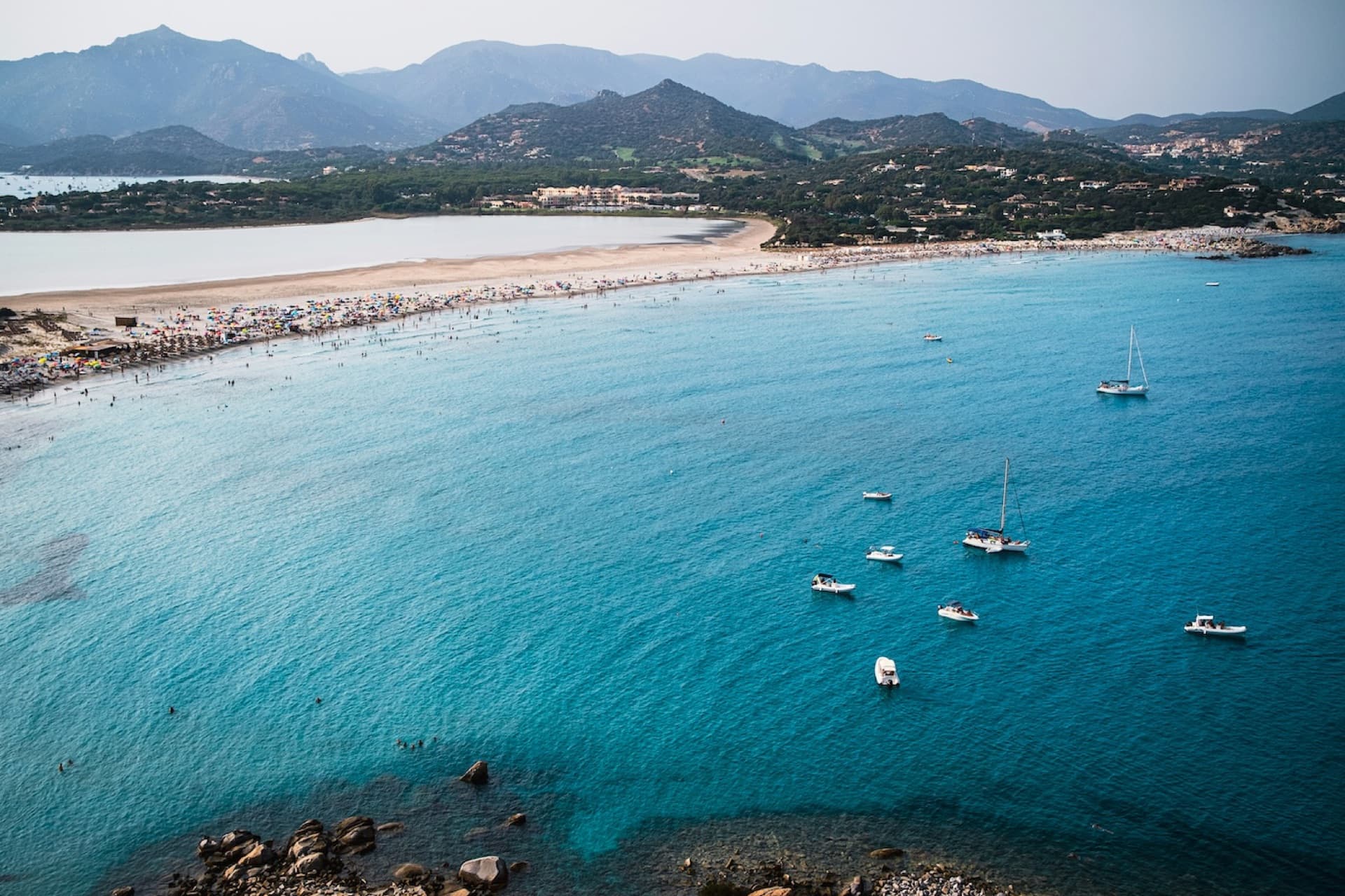
Sardinia is Italy's wind island, and for kitesurfers it splits neatly in two. The north catches the Mistral, the cold northwesterly that funnels through the strait between Sardinia and Corsica and turns the coast around Porto Pollo into one of the most reliable summer kite zones in the Mediterranean. The south has Punta Trettu, a shallow lagoon that has quietly become one of Europe's great places to learn. One island, two very different sessions.
The wind: Mistral and thermals
Two things drive the wind here. The first is the Mistral, a dry, strong northwesterly born in the Rhône valley that sweeps down across the western Mediterranean. As it squeezes through the Bocche di Bonifacio, the narrow strait between Sardinia and Corsica, it accelerates, which is why the north of the island is so much windier than its latitude suggests. The second is the summer thermal: on lighter days a sea breeze builds through the afternoon and tops up the wind, so even outside a Mistral the kite zones often work from early afternoon onward. Peak season runs from roughly May to September, with the Mistral most frequent in late spring and early autumn.
The north: Porto Pollo
Porto Pollo, near Palau on the northeast tip, is the headline spot. A sandy isthmus separates two bays, so you get a choice of conditions on the same day: a flat, shallow lagoon on the sheltered side that is ideal for learning and freestyle, and an open, choppier bay on the windward side for jumping and small waves. Sitting right in the throat of the Bocche di Bonifacio, it picks up the Mistral hard and holds wind on a remarkable number of summer days. It is busy in July and August, but the space spreads everyone out.
The south: Punta Trettu
Punta Trettu, on the southwest coast near San Giovanni Suergiu, is the opposite kind of spot and a beginner's dream. The lagoon is waist-deep and flat for hundreds of metres, the wind blows side-onshore so it carries you back toward the beach, and a cluster of schools lines the shore. It is calmer and less Mistral-exposed than the north, which is exactly what makes it such a forgiving place to put in your first hours. When it does blow hard, the same flat water turns into a freestyle and foil playground.
When to go
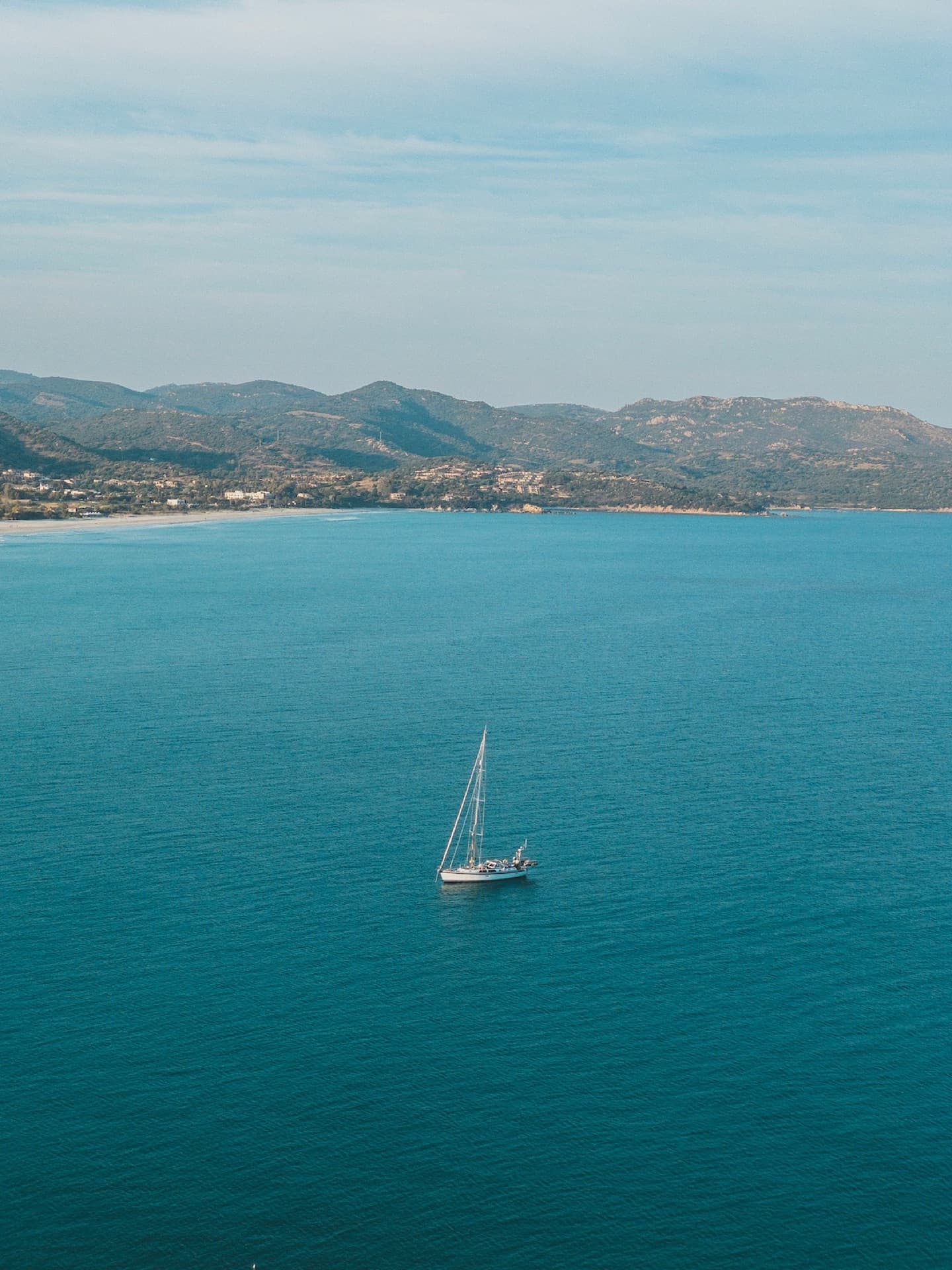
May to September is the season. July and August are the warmest and busiest, with thermals adding to the synoptic wind. June and September are the sweet spot: the Mistral is still frequent, the water is warm, and the crowds are thinner. Water sits around 19 to 24°C in summer, so a shorty or a 3/2 is plenty, and many ride in boardshorts at the peak.
Before you go
Fly into Olbia for the north (about 40 minutes from Porto Pollo) or Cagliari for the south (around an hour from Punta Trettu). A car is worth it: the two zones are a long way apart, and if a Mistral is forecast you will want to be near the north coast. Most riders bring a mid-size quiver, with a 9 and a 12 covering the typical range and something smaller for a strong Mistral day.
Before you book, check the live Porto Pollo forecast or the Punta Trettu conditions to see how the Mistral is lining up.