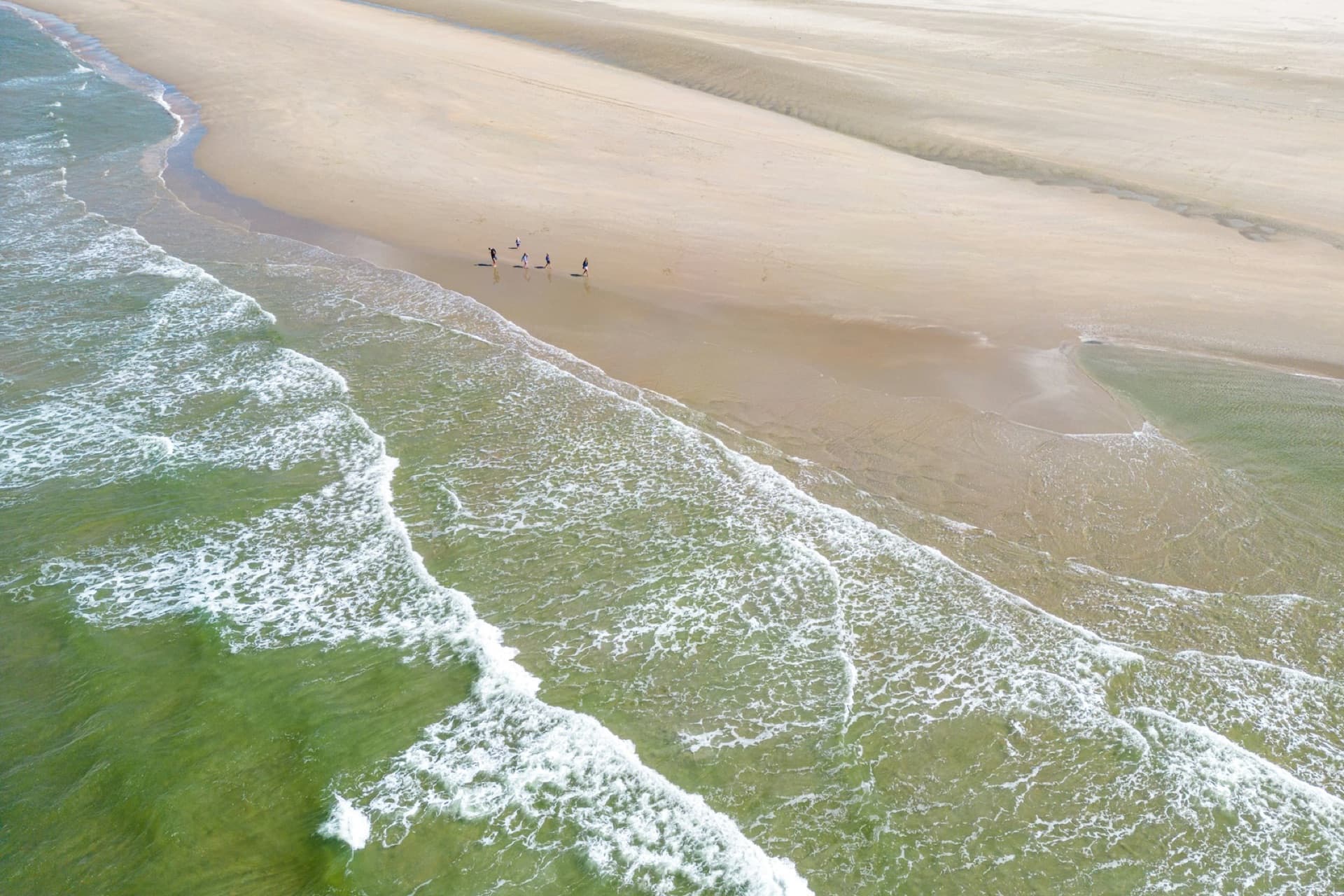
Few countries are built for kitesurfing quite like the Netherlands. The land is flat, so nothing slows the wind before it reaches the coast; the entire western edge faces the open North Sea; and the prevailing southwesterlies deliver rideable wind on a huge number of days a year. Add one of the densest kite communities on earth, schools at almost every beach, and a culture that treats a 30-knot autumn storm as a reason to celebrate, and you have a year-round playground.
When the wind blows
The Dutch coast works in every season; what changes is the trade-off between strength and comfort.
- Autumn and winter (October to March) bring the strongest, most frequent wind as Atlantic depressions roll through. This is storm season: 25 to 40 knots is common. The catch is cold: water drops to 4–8°C, so you are in a 5/4 wetsuit with hood and gloves.
- Spring and autumn shoulders are the sweet spot for many riders: still plenty of wind, water creeping up to a workable temperature.
- Summer (June to August) is lighter and more thermal (sea breezes fill in on warm afternoons), but the water hits 17–19°C and the whole coast is in boardshorts-and-shorty mood. Less nuking, far more pleasant.
Wind direction matters for safety here: onshore and cross-onshore (W, NW, SW) is the norm and keeps you blowing back to the beach. Never ride a straight offshore (easterly) wind on the open coast.
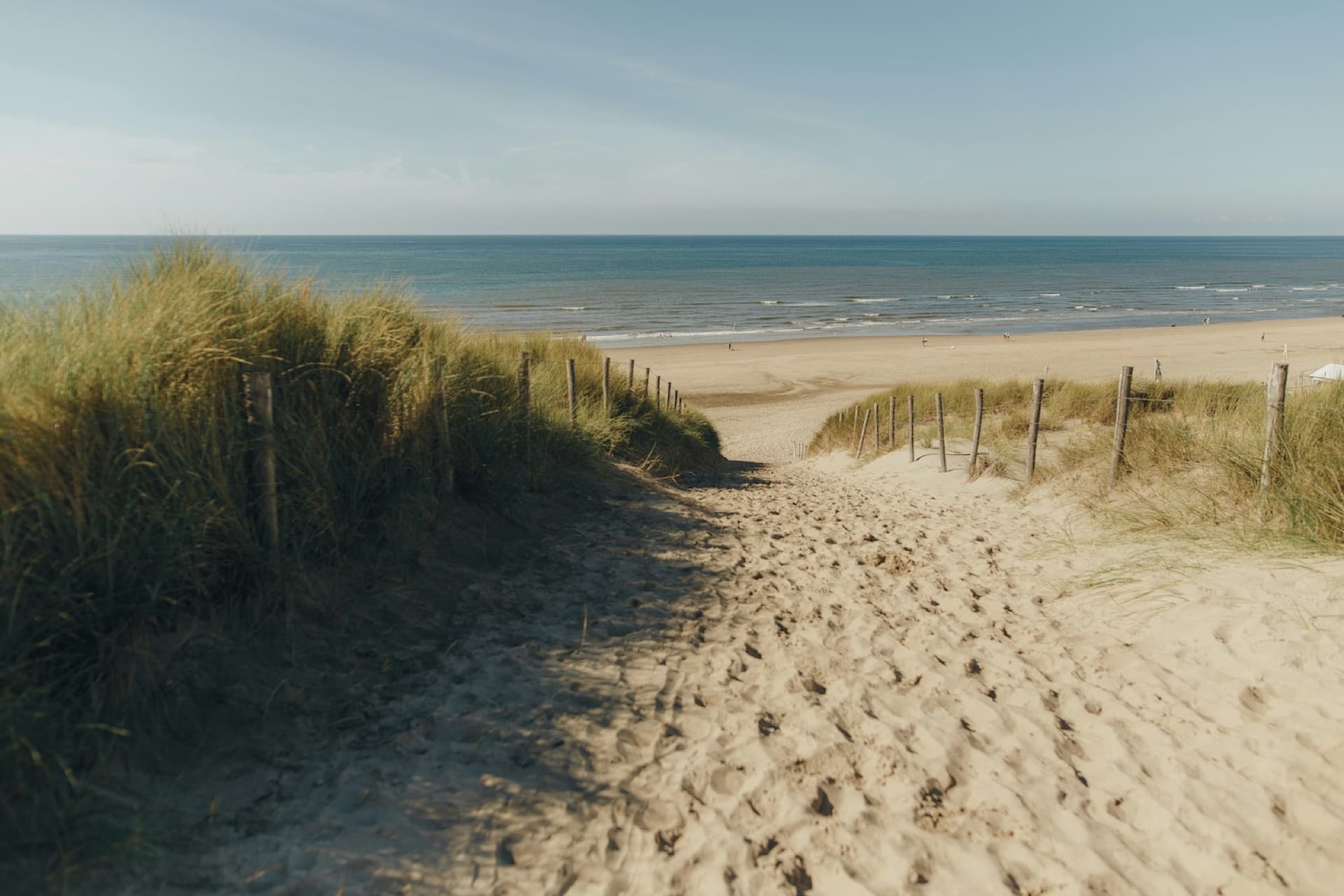
The coast, north to south
- North Holland has a long run of sandy beaches: Wijk aan Zee and Zandvoort are the big, accessible hubs near Amsterdam, with Den Helder anchoring the windy northern tip.
- South Holland centres on Scheveningen, the city beach by The Hague, and Hoek van Holland at the mouth of the Rotterdam waterway.
- Zeeland is the heartland. Brouwersdam, a dam with flat water on the lake side and waves on the sea side, is the closest thing the country has to a kitesurfing mecca, and Domburg, Ouddorp and Cadzand round out a coast made for it.
- The Wadden island of Texel offers a wilder, less crowded option up north.
Practicalities
Tides are real on the North Sea. Some spots open up a wide, shallow playground at one stage of the tide and shrink at another, so check the tide alongside the wind. Cold-water gear is the main investment: a good 4/3 gets you through three seasons, a 5/4 with hood and gloves for deep winter. Beyond that, the Netherlands is gloriously easy: compact, well-served by schools, and rarely more than an hour's drive from a working spot.
The bottom line: come in late spring through early autumn for the best mix of wind and warmth, or embrace the neoprene and chase the winter storms. Either way, line up your session with the live conditions before you load the car.