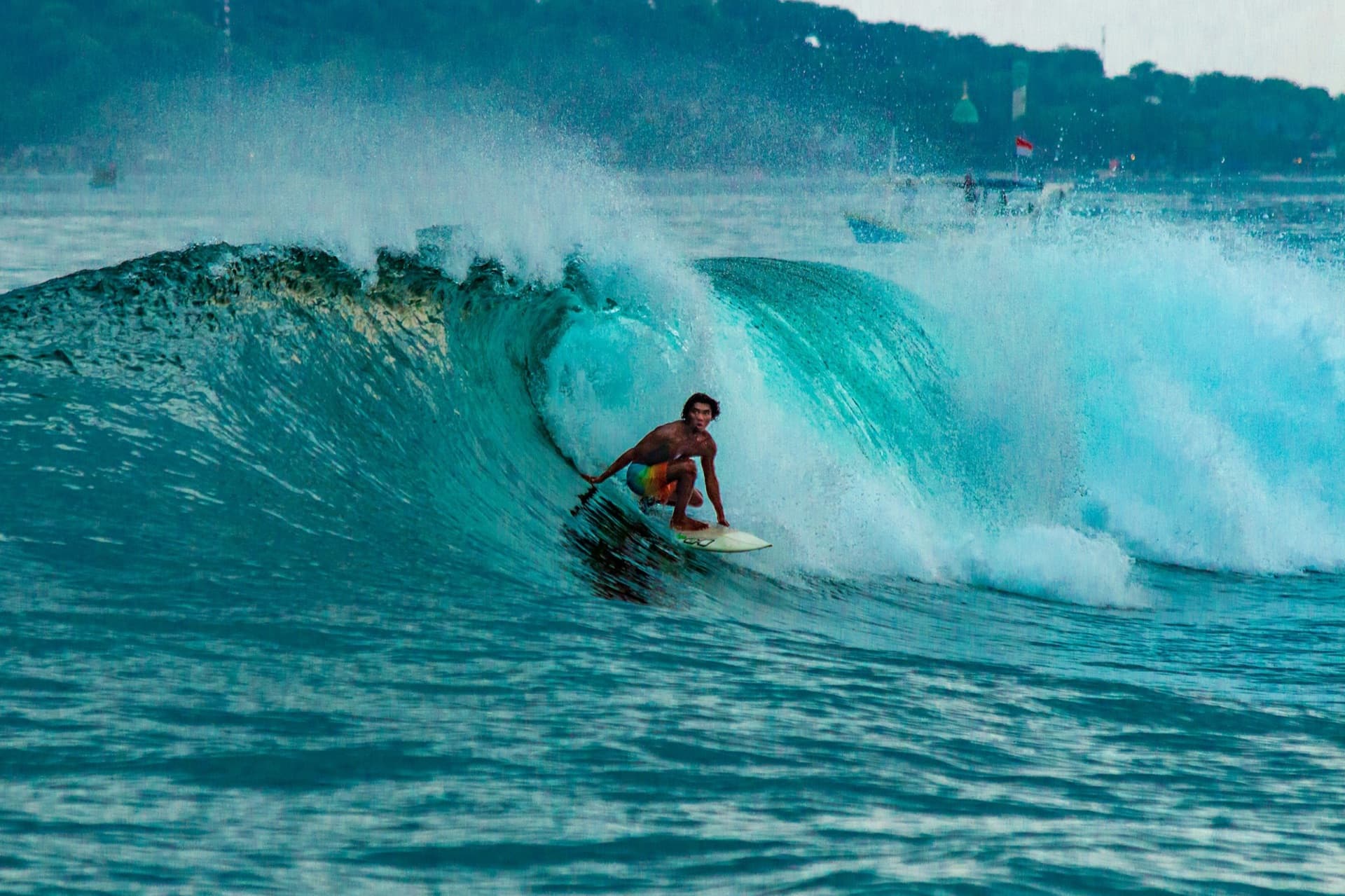
Bali sits square in the path of the Indian Ocean's swell machine, close enough to the Southern Ocean to pick up groundswell almost year-round and tropical enough that you will surf in boardshorts while you do. The island's gift is its geography: when one coast is onshore, the other is offshore, so there is nearly always somewhere clean to surf if you know which way the wind is blowing.
Two coasts, two seasons
Bali's surf runs on a simple seasonal switch.
The dry season, roughly April to October, is the headline act. Southeast trade winds blow offshore onto the west and southwest coasts, grooming the powerful reefs of the Bukit Peninsula. Swell from the Southern Ocean is most consistent and largest from May to September. This is when Uluwatu and its neighbours do what they are famous for.
The wet season, November to March, flips it. The wind swings around to blow offshore on the east coast instead, so the crowds thin on the Bukit and spots like Sanur and Nusa Dua come into their own. It is greener, quieter and still very surfable if you follow the wind.
Most of Bali's best waves break over shallow coral, so they reward respect: study the tide, mind the reef, and bring a pair of booties.
When to go
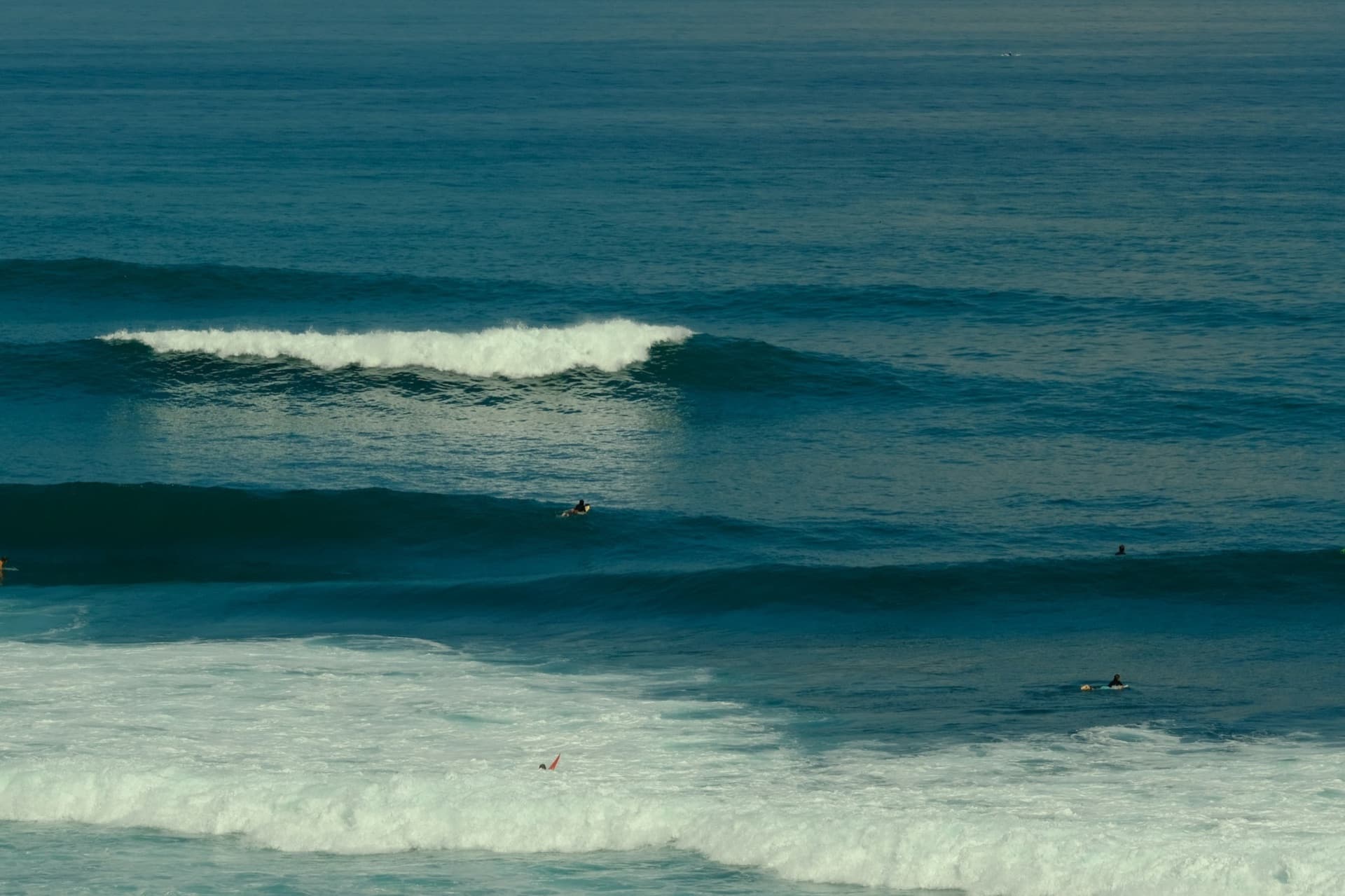
- May to September is the sweet spot: the most consistent Southern Ocean groundswell, reliable offshore trades on the Bukit, and warm, sunny weather. It is also the busiest, so a dawn patrol pays off.
- April and October are quieter shoulder months with plenty of swell and a touch more room.
- November to March is the wet-season alternative: chase the east-coast spots on their offshore mornings and enjoy the calm everywhere else.
The water is warm all year, around 27–29°C, so you will never need more than a rash vest, but reef booties are worth packing for the sharper reefs.
Which break
The Bukit Peninsula holds the island's marquee reefs, most of them lefts:
- Uluwatu is the icon: long, walling left-handers and barrels across several sections of reef, working through a wide range of size and tide. It is the heartbeat of Bali surfing.
- Padang Padang is the perfect, hollow left barrel known as the Balinese Pipeline, a wave for experienced surfers when the swell and tide line up.
- Bingin, Impossibles, Balangan and Dreamland round out the Bukit run, each with its own character and tide window.
- Canggu further north mixes beach and reef peaks with a lively scene, a good step up for improving surfers.
- Kuta Beach is the classic sandy-bottomed beginner wave, Medewi out west is a long, mellow left point, and Sanur comes alive on the wet-season offshores.
Before you go
Fly into Denpasar (DPS); the Bukit is around an hour south depending on traffic. A scooter is how most surfers get between breaks, with boards in a rack on the side. The famous reefs draw crowds, so an early start buys you cleaner wind and fewer bodies, and a little reef etiquette goes a long way in the line-up. Tide matters as much as swell here, so check it before every session.
The verdict: come in the dry season, May to September, base yourself near the Bukit, and follow the offshore wind to whichever reef is firing. Before you book, watch the live Uluwatu forecast and read the swell direction and period alongside the morning wind. A clean southwest groundswell with the trades behind it is what you are waiting for.