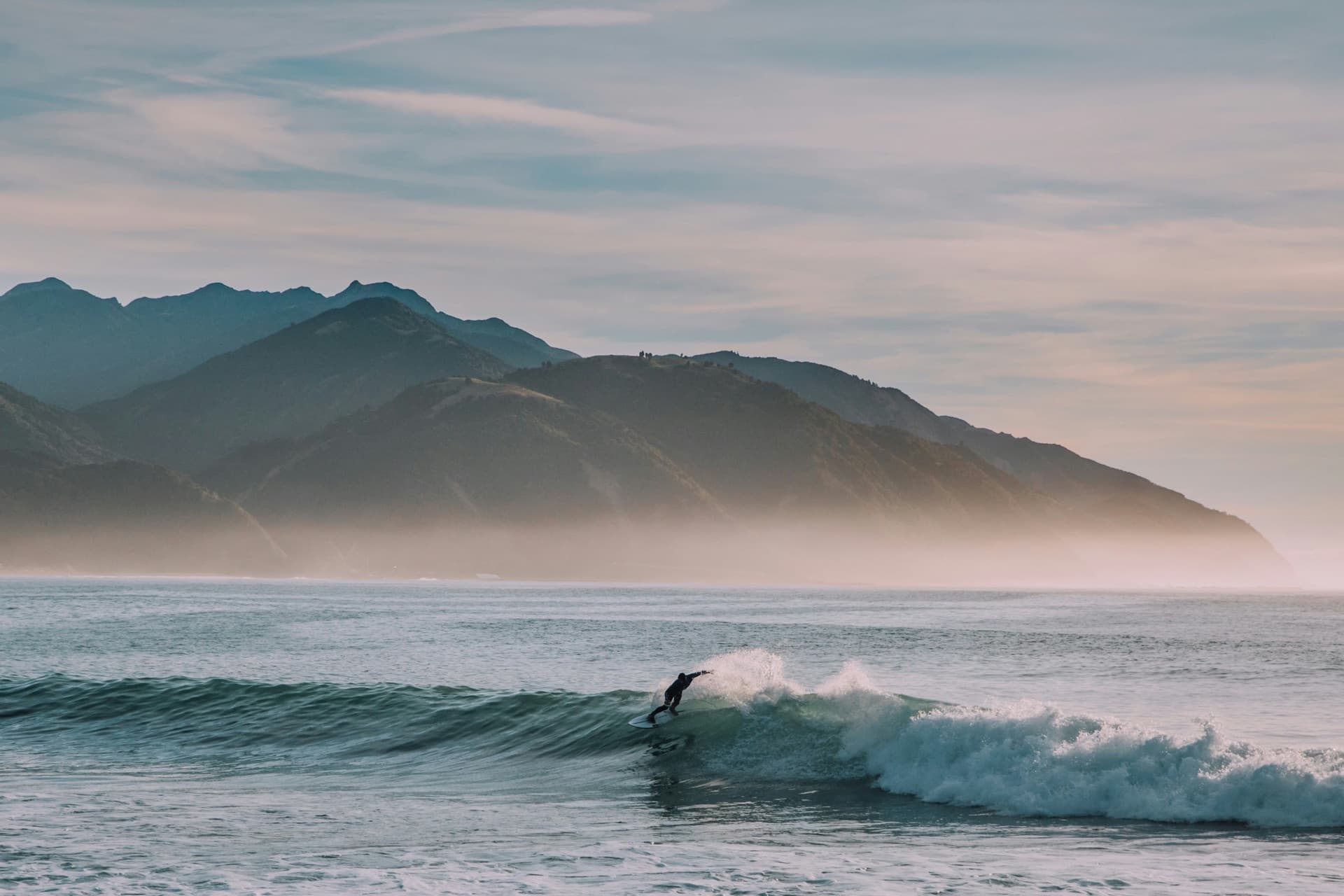
"It's 3 foot and offshore" sounds like all you need to know, but a surf forecast hides a lot more than wave height. The same 3 foot can be a powerful, peeling wall or weak, gutless slop depending on the numbers next to it. Learning to read the whole forecast, not just the height, is what turns a hopeful drive into a confident one. Here is what each part actually tells you.
Wave height: the headline that lies on its own
Wave height is the first number everyone looks at, and the least useful in isolation. A 1.5 m reading can mean a soft, mushy wave or a heavy, powerful one, and the height alone will not tell you which. It is the starting point, not the answer. For that you need the number most people skip.
Swell period: the most important number
Period is the gap in seconds between waves, and it is really a measure of energy. It separates two completely different kinds of swell:
- Short period (around 5 to 8 seconds) is windswell, kicked up by local wind. It is weak, often choppy, and the wave tends to crumble rather than stand up.
- Long period (12 to 16 seconds and up) is groundswell, born from distant storms. It carries far more energy, stands up cleanly on the bank or reef, and breaks with real power. A long-period 1 m can pack more punch than a short-period 1.5 m.
If you read one number besides the height, read the period. It is the difference between a wave worth surfing and a wasted paddle.
Swell direction: does it even reach you
Every spot has a window: the arc of directions a swell has to come from to wrap in and break well. A south-facing beach can sit flat in a big west swell that a nearby point is firing on. Direction decides whether the energy actually gets to your spot, and how it hits the bank when it does. A break that needs a clean west-northwest swell will disappoint on anything too far off that angle, however big the numbers look.
Wind: clean or blown out
Wind grooms the wave face, or wrecks it. Offshore wind, blowing from the land out to sea, holds the wave up and smooths the face into something clean and ridable, and a light offshore is the classic dream condition. Onshore wind, sea to land, flattens and crumbles everything into mush. Cross-shore sits in between. A great swell with the wrong wind is a write-off, which is the same direction logic the wind sports live by (more on that in onshore, offshore and cross-shore). Light wind, ideally offshore, is what you are hoping for.
Tide: the local make-or-break
Many spots only work on a certain tide. Some sandbanks need mid-to-high water to break properly; some reefs only fire on the push and go fat or dangerous on a low. Tide is the most local variable of all, and the one that catches travellers out: you can have perfect swell and wind and still find the spot unrideable because you turned up two hours off the tide.
Putting it together
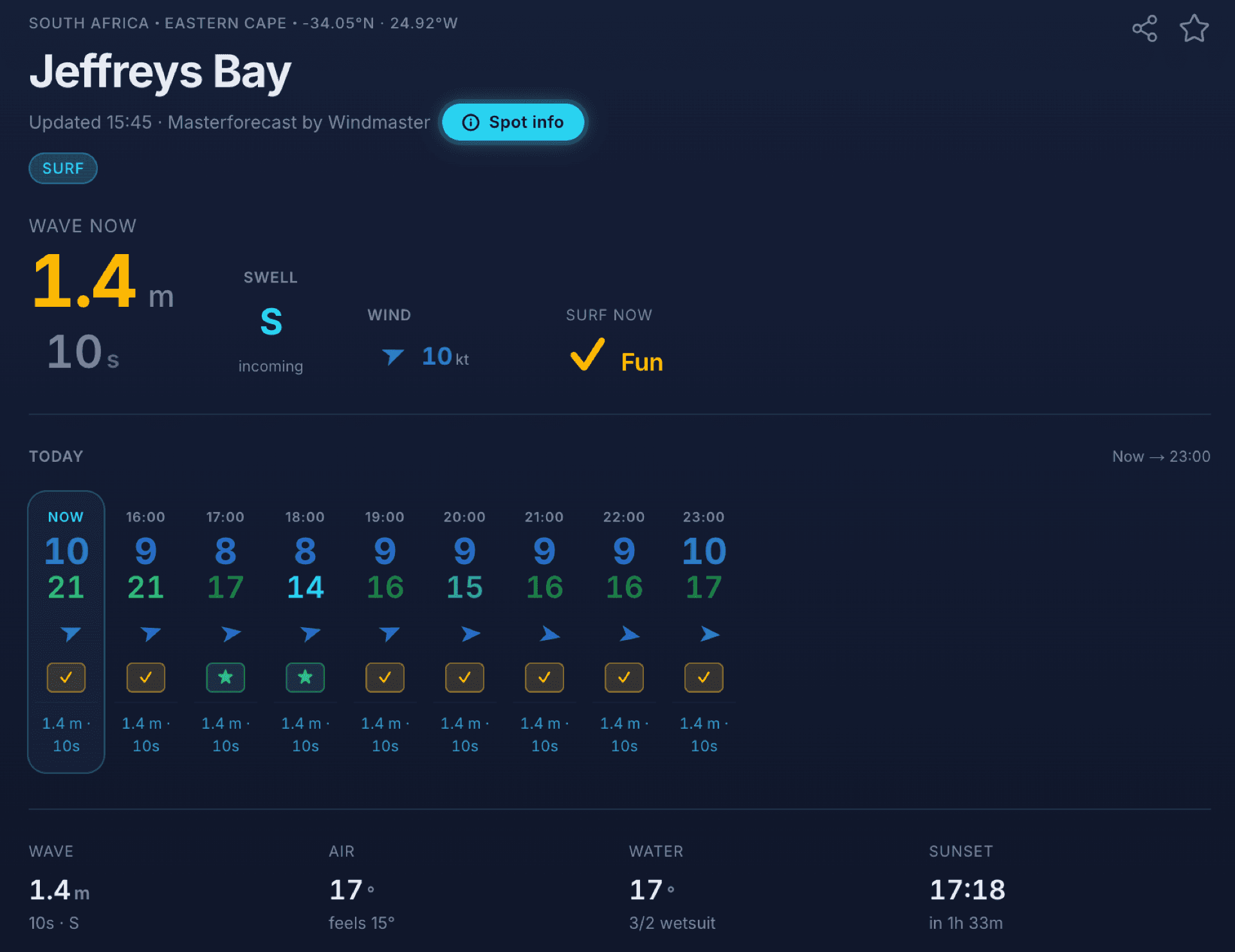
No single number makes a session. The combination does: enough height, a long enough period to carry power, a swell direction your spot likes, and light or offshore wind. That is what Windmaster's surf verdict weighs together, wave height, period, wind and swell direction, into one read on whether it is worth paddling out, instead of leaving you to juggle the numbers in your head. Tide is the one piece to add yourself: it is so spot-specific that it is worth checking the tide table for your break alongside the verdict.
The quick read
- Period tells you if there is real energy (long) or just chop (short).
- Height sizes it, but only once the period checks out.
- Direction decides whether the swell reaches your spot.
- Wind decides if the face is clean (offshore) or blown out (onshore).
- Tide can make or break a spot on the day.
Run through those five and a forecast stops being a gamble. Then check your spot and paddle out with a plan, not a hope.