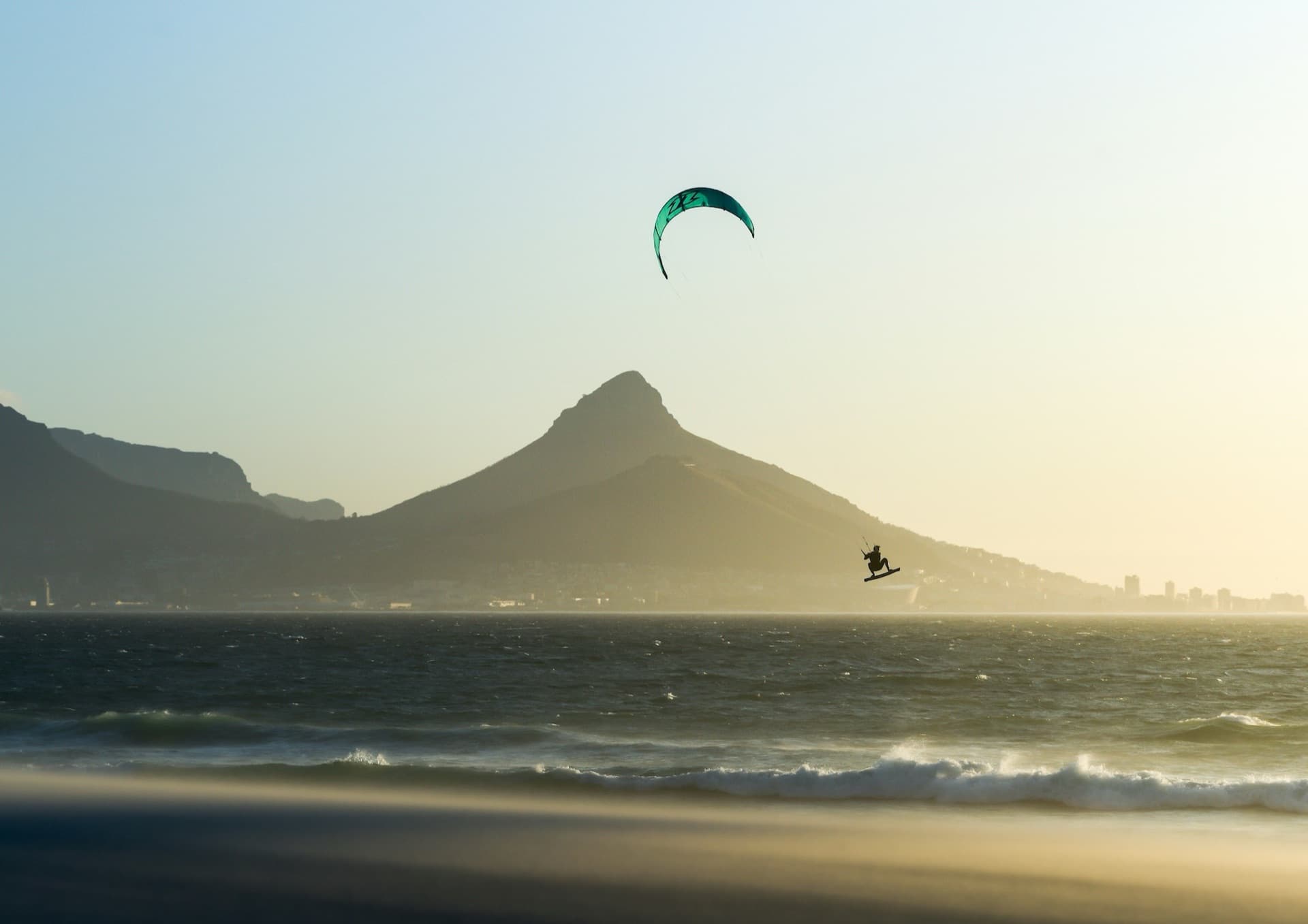
Before wind strength, before kite size, one thing decides whether a beach is safe to ride: which way the wind blows relative to the shore. Get this wrong and the best wind of the year can put you in real danger. Here is the whole picture in plain terms.
The three directions
Picture yourself on the beach, looking out to sea.
- Onshore blows from the sea straight onto the land, into your face. If something goes wrong, the wind pushes you back to the beach, which is reassuring, but a strong onshore can also pin you in the shore break and make launching and landing busy.
- Offshore blows from the land out to sea, at your back. It pushes you away from shore, toward open water. This is the dangerous one: a gear failure, a tired body, or a dropped kite and you are drifting out with nothing to stop you. Never ride a true offshore wind without boat or jet-ski cover.
- Cross-shore blows parallel to the beach. This is the ideal: you ride up and down the coast, you are neither slammed onshore nor dragged offshore, and self-rescue stays simple. Most schools and competitions look for cross-shore or cross-onshore.
The in-betweens
Real wind rarely lines up perfectly, so you also hear:
- Cross-onshore (angled in toward the beach): the most common safe setup, and what most spots are rated for. Easy to get back in.
- Cross-offshore (angled out to sea): ride with caution, and only where there is rescue cover. The offshore component still wants to take you out.
Ranked from safest to most dangerous: cross-onshore, then onshore, then cross-shore, then cross-offshore, then offshore. (Pure onshore keeps you safe but can be a handful in the shore break; cross-shore is the nicest to actually ride.)
How to check it for your spot
You need two things: the wind direction from the forecast, and the way your beach faces. Hold one against the other. A beach facing west is onshore on a westerly, offshore on an easterly, and cross-shore on a northerly or southerly. That is exactly why the same wind speed can be a perfect day at one beach and a no-go at the next one along the coast, and why our spot pages flag the directions that work. Pulling direction off a forecast is covered in how to read a wind forecast.
A few rules that keep you safe
- Never ride offshore alone. No exceptions without rescue cover.
- Watch for shifts. A wind that backs or veers mid-session can turn a safe cross-shore into a cross-offshore. Keep an eye on it.
- When unsure, ask. Local schools know the spot's tides, hazards, and quirks better than any forecast.
Direction is the call you make before you even think about kite size. Get it right and the rest is just a good session.