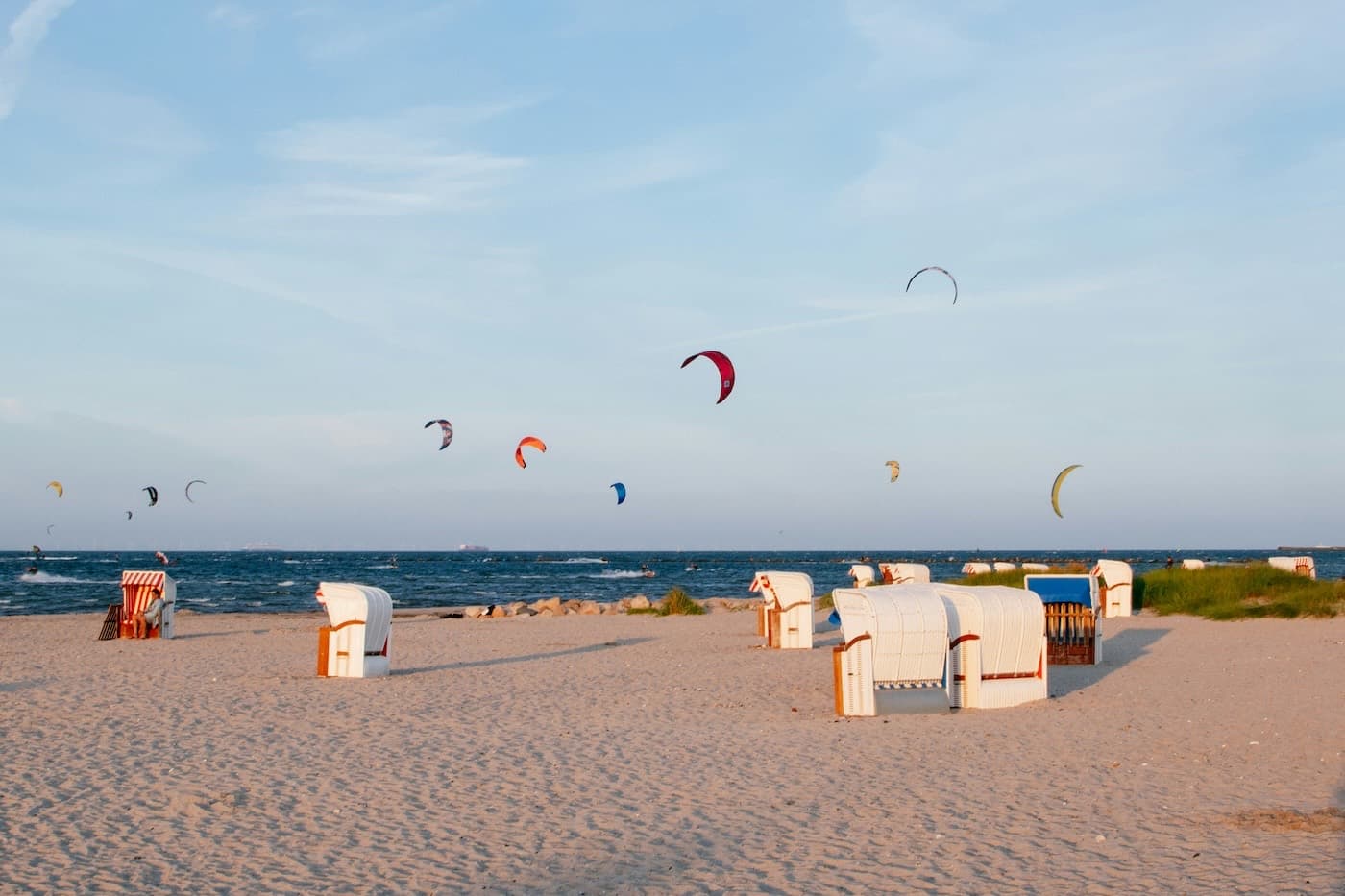
Fehmarn is the island German kiters grew up on. Sitting in the Baltic off the Schleswig-Holstein coast, linked to the mainland by a bridge, it catches wind from almost every direction and spreads its spots around the compass so there is nearly always a side of the island that works. Add a pair of shallow, standing-depth bays and you have one of the best places in the country to learn, as well as a genuine all-rounder for everyone else.
The wind
Fehmarn runs on the prevailing westerlies and south-westerlies that sweep across northern Europe, reinforced through spring and autumn by passing Atlantic systems and topped up by summer sea breezes. A typical day sits around 12 to 22 knots, rideable rather than nuking, which is part of what makes the island so manageable. Because the spots face different directions, the move here is simple: check the wind direction, then pick the side of the island that turns it side or side-onshore.
The spots, around the island
The headline learner zones are the shallow bays. Gold (Burgtiefe) and Lemkenhafen offer waist-deep, flat water that stands still long enough to make body-dragging and water starts far less daunting, which is why the schools cluster there. Wulfener Hals, on the more open south-eastern side, is the spot for stronger wind and a bit more chop, popular with freestylers and a long-time event venue. Quieter corners at Wallnau and Grüner Brink on the west and north give you options when the popular bays are busy or the wind swings.
When to go
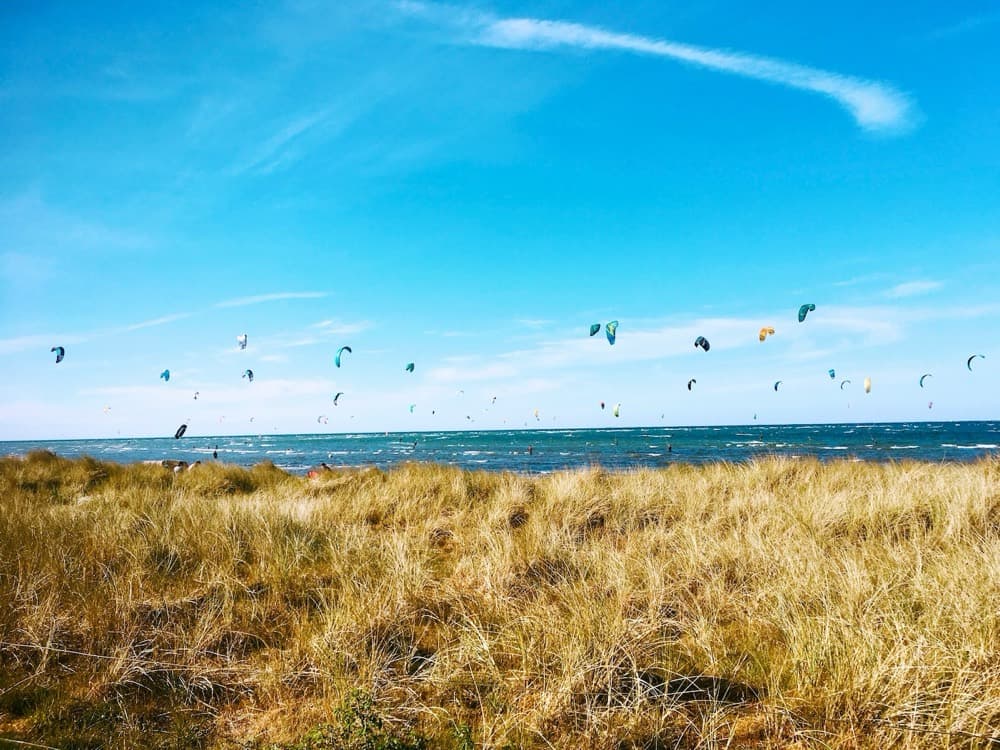
The season runs from roughly April to October, busiest and warmest through the summer school holidays. Spring and autumn bring the steadiest, stronger wind for those who do not mind cooler air, while midsummer trades some of that reliability for thermals, warm sand and long evenings. The Baltic warms up more than the open North Sea, reaching the high teens by late summer, but it is still a wetsuit sea: a 4/3 covers most of the season, with thicker neoprene at the edges.
Before you go
Fehmarn is an easy run from Hamburg (around two hours) or from across the border in Denmark, and the bridge means no ferry to plan around. Camping and holiday flats cluster near Burgtiefe and the southern bays, close to the schools and the flat water. Bring a quiver built for moderate wind, a 9 and a 12 will see you through most days, with something smaller for a windy autumn front, plus a 4/3 wetsuit.
If you are starting out, the shallow bays and the island's kite schools on Fehmarn make it one of Germany's friendliest places to take a first course. Before you load the car, check the live Fehmarn forecast to see which side of the island will be working, and if you are touring the German coast it pairs naturally with St. Peter-Ording on the North Sea.