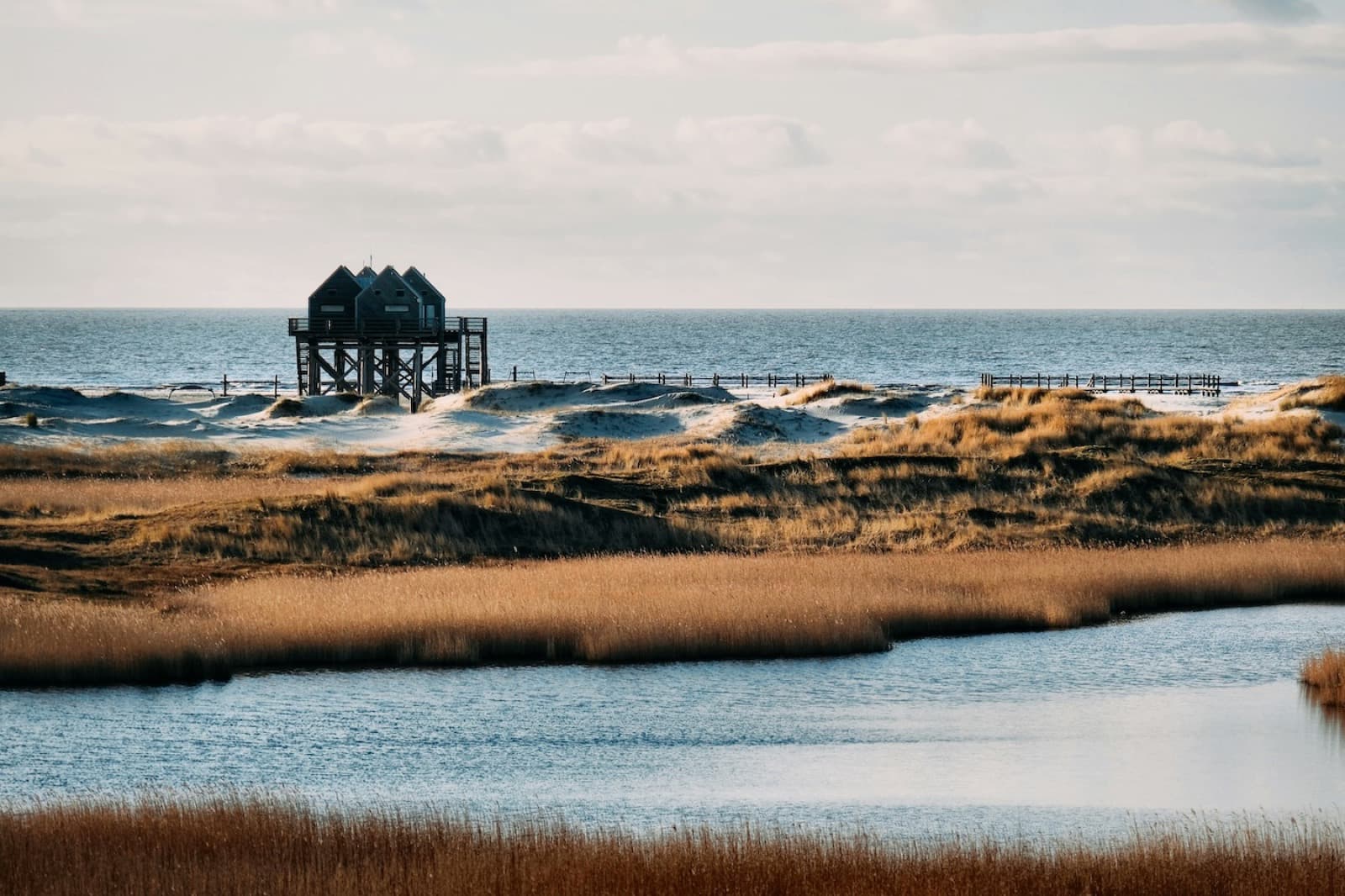
St. Peter-Ording, known to everyone as SPO, is the closest thing Germany has to an endless kite beach. On the Eiderstedt peninsula on the North Sea coast, it runs for some twelve kilometres of wide, sandy tidal flats across the Ording, Bad and Böhl zones, with the famous stilt houses standing out on the sand. When the tide is right, the shallow water and acres of space make it a forgiving, beginner-friendly place to ride, and one of the busiest kite beaches in the country.
The wind
SPO runs on the westerly and south-westerly winds that dominate the North Sea, reinforced in spring and autumn by Atlantic systems and by summer sea breezes that fill in on warm afternoons. A typical day sits around 12 to 22 knots. The wind tends to come onshore or cross-onshore off the sea, which is the safe direction for a big open beach, but the defining factor here is not really the wind at all.
It is all about the tide
The North Sea has a large tidal range, and at St. Peter-Ording the water goes a very long way out. At low tide you can walk for what feels like forever across firm sand before reaching the sea; at the right stage of the tide, a wide, shallow, standing-depth lagoon forms over the flats, which is the magic window for lessons and progression. This is why the schools here are mobile: rather than a fixed base, they move along the beach each day to follow the wind and the water, and lesson times shift with the tide chart. Reading the tide is the single most important skill for a good day at SPO.
When to go
The season runs from roughly April to October, with the steadiest, stronger wind in spring and autumn and reliable thermals through summer. High summer is the warmest and busiest stretch, when the beach fills with holidaymakers and the sea is at its friendliest, though still cool. Because conditions depend on the tide as much as the wind, it pays to check both before you commit to a session. The North Sea stays cold, so a good wetsuit matters even in July: a 4/3 for the warm months and thicker neoprene at the shoulders.
Before you go
St. Peter-Ording is around two hours by road or rail from Hamburg, with plenty of holiday flats and campsites in town near the beach access points. Bring a quiver suited to moderate, gusty-edged coastal wind, a 9 and a 12 for most days with a smaller kite for a strong front, and a proper wetsuit. Above all, bring a tide table and plan your session around the water.
The wide shallows and the beach's kite schools in St. Peter-Ording, which move along the sand to find the best wind and tide each day, make it a strong place to take a first course. Before you go, check the live St. Peter-Ording forecast alongside the tide, and if you are exploring the German coast it pairs well with the Baltic island of Fehmarn.