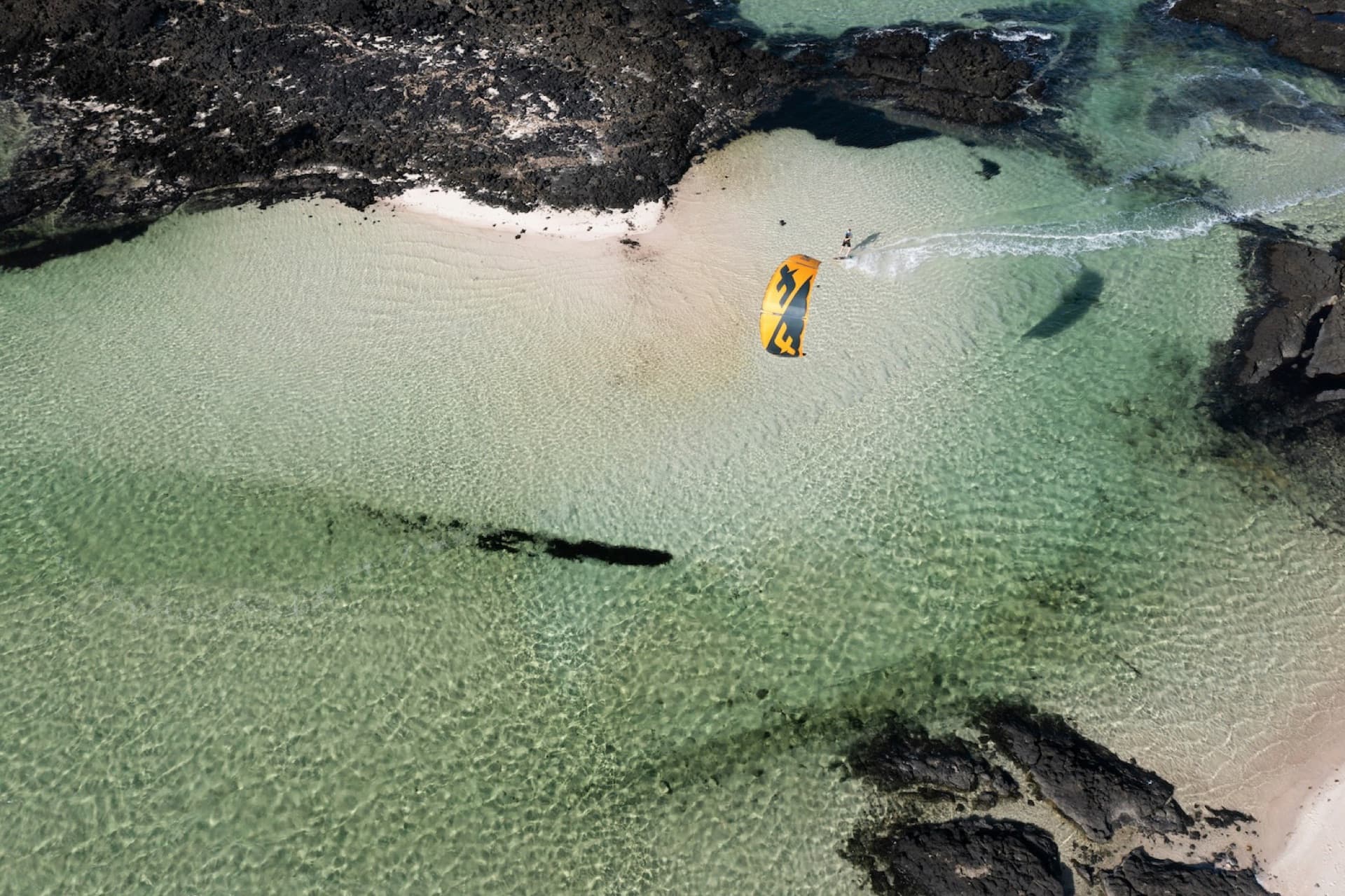
Fuerteventura is the windiest of the Canary Islands, and it rides almost every day in summer. While most of Europe waits on passing weather systems, this slice of volcanic desert off the coast of Africa sits in the path of the Atlantic trade winds, which blow steady and warm from spring through autumn. Add the famous freestyle lagoon at Sotavento and a string of wave spots up north, and you have a destination that works for every level.
The wind: the trades
Fuerteventura runs on the Alisios, the northeasterly trade winds that flow down the African coast and across the Canaries. As they pass through the gap between Fuerteventura and Lanzarote they accelerate, and on hot afternoons a thermal effect adds to them, so 18 to 28 knots is the daily norm in summer and stronger days are common. The trades are at their most reliable from May to September, when wind on 25 days out of 30 is a fair expectation. Winter still delivers, just lighter and more variable, and unusually mild for the latitude.
The south: Sotavento and Risco del Paso
The southeast coast is the island's flat-water heart. Sotavento is a ten-kilometre stretch of white sand that has hosted the PWA Freestyle World Cup for decades. At low tide a huge, shallow lagoon forms behind a sandbar: warm, flat, waist-deep water that is perfect for freestyle, foiling, and progression. Just along the beach, Risco del Paso sits where the lagoon meets the open sea, giving you flat water on one side and small waves on the other. Both are side-shore and beginner-friendly when the lagoon is in.
The north: Corralejo and the wave spots
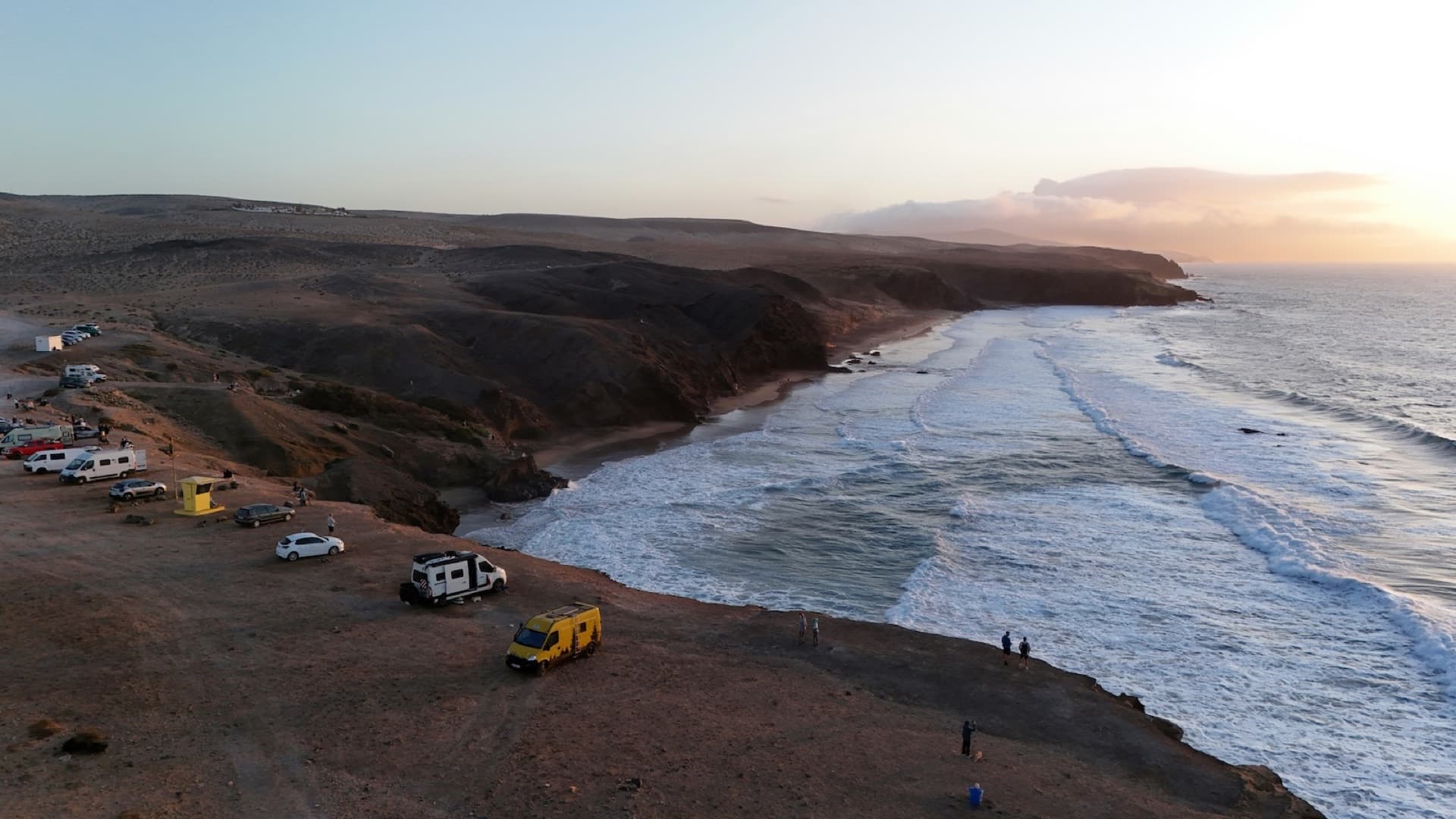
The north end of the island is busier and more wave-oriented. Flag Beach, just outside Corralejo, is the main hub: a long, side-onshore beach with flat-to-choppy water and a strong school scene, backed by the big dunes. Corralejo Bay sits right in town, while Majanicho and El Cotillo on the wilder north and west coasts pick up Atlantic swell on the volcanic reefs for riders who want to trade flat water for waves.
When to go
May to September is the core trade-wind season and the safest bet for wind every day. The shoulder months and even winter are very rideable, which is part of Fuerteventura's appeal: a February trip here can deliver more sessions than a French Atlantic summer. Water stays mild year-round, roughly 18°C in winter to 23°C in late summer, so a shorty or a 3/2 suits the warm months.
Before you go
Fly into Fuerteventura airport (El Matorral) near Puerto del Rosario. The southern lagoons are about 45 minutes away and Corralejo about 40 minutes north, so a car makes it easy to follow the wind between them. Check the tide for Sotavento, where the lagoon comes and goes with the water, and bring a 7, 9, and 12 to cover the trade-wind range.
Before you go, watch the live Sotavento forecast to see how the trades are running.