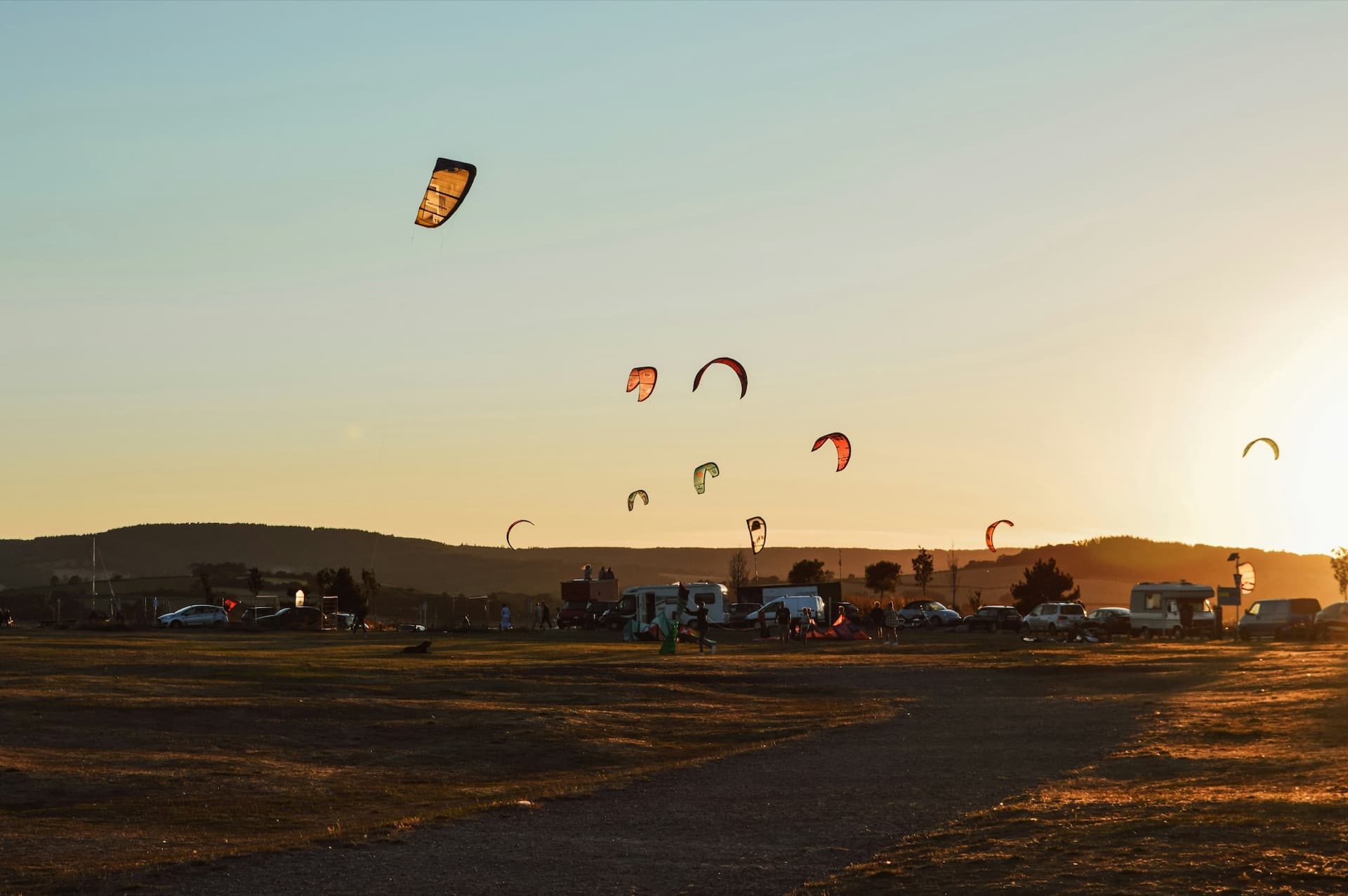
A wind forecast looks simple: a number for the wind, a number for the gusts, an arrow for direction. But those numbers hide a lot, and learning to read them properly is what turns "it said 20 knots" into a confident call on whether to load the car. Here is what each part actually tells you.
Average wind: the number you size your kite to
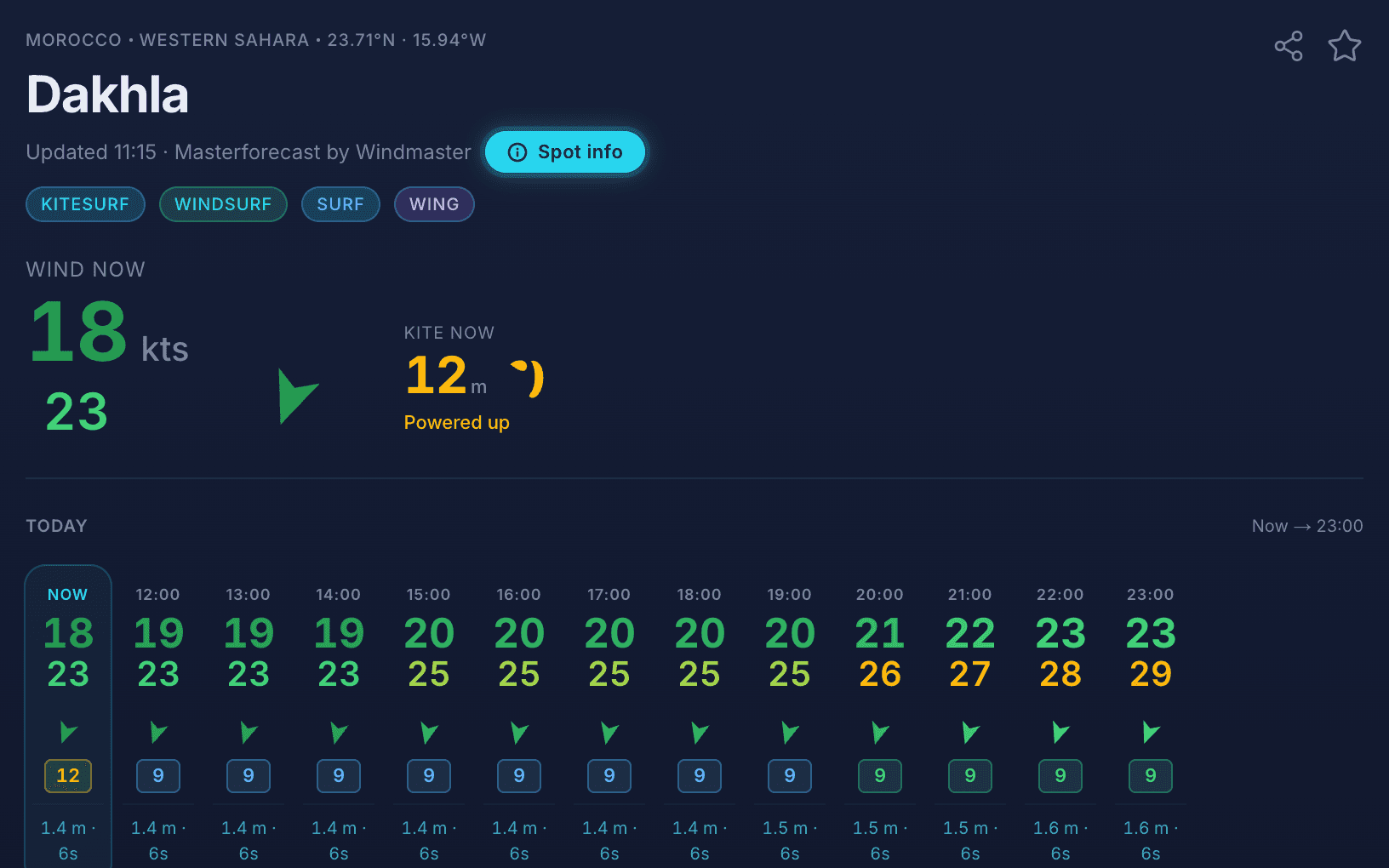
The headline wind speed is the average, and it is the figure your kite choice hangs on. A steady 20 knots is a comfortable 9 m day for a 75 kg rider. Everything else on the forecast is context around this one number, so read it first and check it against a kite-size guide.
One catch: the average is an hourly figure, and wind is rarely flat across the hour. Which is where gusts come in.
Gusts: the spread is the real story
The gust figure is the peak the wind is expected to hit. On its own it means little; what matters is the gap between gust and average, the spread.
- A tight spread (say 18 gusting 22) is smooth, steady wind. Easy to read, easy to size for.
- A wide spread (16 gusting 28) is gusty and punchy. The lulls drop you and the peaks overpower you, so size down and ride a touch under the average.
Gusty wind is harder and more tiring than its average suggests, and it is the most common reason a forecast "feels wrong." Two days can both average 20 knots and ride completely differently.
Direction: where it blows from changes everything
The arrow tells you where the wind comes from, and it decides two things: whether your spot even works, and whether it is safe. A beach that is perfect cross-shore can be unrideable or dangerous on another direction. This matters enough to have its own guide: onshore, offshore, and cross-shore.
Direction also names the wind. The same spot reads completely differently on an easterly versus a westerly, which is why local winds get their own names (see the winds of Europe).
Timing: forecasts move, and so does the wind
A forecast is a snapshot that updates as new model runs come in, so check it again the morning of your session, not just three days out. Within a day, watch the afternoon: many summer spots run on a thermal sea breeze that builds through the day and fades at night, so the same forecast can mean a dead morning and a firing 4 p.m.
Confidence: do the models agree?
Every forecast comes from a weather model, and there are several (GFS, ECMWF, ICON, and high-resolution regional ones). When they all show a similar number, confidence is high. When they disagree by 10 knots, the outcome is genuinely uncertain and you should keep your plans loose.
This is the idea behind Windmaster's Masterforecast: instead of one raw model, it picks the best model for each region and corrects it for the local effects raw models miss, like the venturi acceleration through the Strait of Gibraltar at Tarifa. The comparison chips beside it show how much the models agree before you commit.
The quick read
- Average wind sets your kite size.
- Gust spread tells you how hard it will really feel (and whether to size down).
- Direction decides if the spot works and if it is safe.
- Timing matters, especially the afternoon thermal.
- Model agreement is your confidence level.
Run through those five every time and a forecast stops being a guess. Then check your spot and pack the right kite.