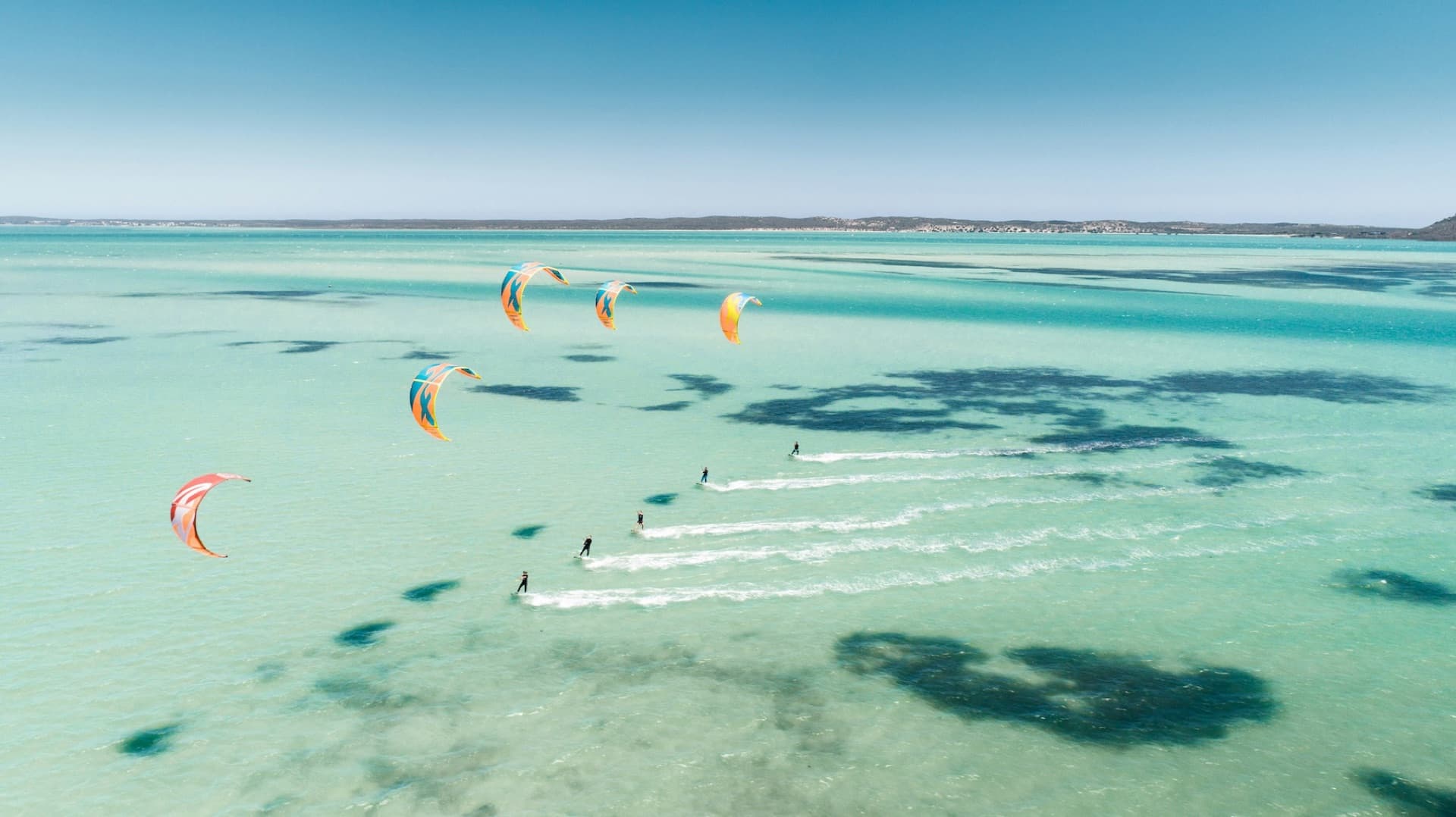
"What size kite do I need?" is the first question every kitesurfer asks, and the honest answer is that it depends on three things: how hard the wind is blowing, how much you weigh, and what you are riding. Get them right and you are powered and comfortable. Get them wrong and you are either schlogging underpowered or hanging on for dear life. Here is how to think about it, with charts by skill level you can actually use.
The three things that decide it
- Wind strength. The big one. More wind means a smaller kite, and a single kite covers a window of wind before it is too little or too much.
- Your weight. A heavier rider needs more pull (a bigger kite) for the same wind; a lighter rider needs less. The rule of thumb is about one kite size per 15 kg of body weight.
- Board and style. A big light-wind board or a foil gets going in far less wind than a small twintip. Waves and freestyle shift the numbers too.
The charts, by skill level
These show the wind range each kite carries, by rider weight, for a standard inflatable kite on a twintip (read off the average wind, not the gusts). The better you ride, the more wind and power you can hold on a given kite, so every size stretches further into the strong stuff as you move up: the 9–10 m a 75 kg beginner tops out on around 25 knots stays rideable past 30 for an advanced rider. Find your level, your weight, and your kite.
Beginner
| Kite | ~55–65 kg | ~70–80 kg | ~90–100 kg |
|---|---|---|---|
| 13–14 m | 8–12 kt | 12–15 kt | 16–19 kt |
| 11–12 m | 11–16 kt | 15–20 kt | 19–24 kt |
| 9–10 m | 15–20 kt | 20–25 kt | 24–29 kt |
| 7–8 m | 20–26 kt | 25–30 kt | 29–34 kt |
| 6 m | 26+ kt | 30+ kt | 34+ kt |
Intermediate
| Kite | ~55–65 kg | ~70–80 kg | ~90–100 kg |
|---|---|---|---|
| 13–14 m | 8–14 kt | 12–18 kt | 16–22 kt |
| 11–12 m | 11–19 kt | 15–23 kt | 19–27 kt |
| 9–10 m | 15–24 kt | 20–28 kt | 24–32 kt |
| 7–8 m | 20–29 kt | 25–33 kt | 29–37 kt |
| 6 m | 27+ kt | 31+ kt | 35+ kt |
Advanced
| Kite | ~55–65 kg | ~70–80 kg | ~90–100 kg |
|---|---|---|---|
| 13–14 m | 8–17 kt | 12–18 kt | 16–22 kt |
| 11–12 m | 12–20 kt | 15–22 kt | 16–25 kt |
| 9–10 m | 16–28 kt | 21–32 kt | 25–36 kt |
| 7–8 m | 26–33 kt | 28–42 kt | 30–45 kt |
| 6 m | 30+ kt | 40+ kt | 42+ kt |
The ranges overlap on purpose: where two kites both work, the bigger one gives more low-end grunt and the smaller one more control. These are starting points, not hard rules, and kite model, board, and style all shift them a notch. When in doubt, especially early on, go a touch smaller.
Don't size to the average alone
These ranges assume reasonably steady wind. How gusty it is matters just as much: a day that averages 20 but gusts to 30 will overpower the kite you sized for the lulls. On gusty days, drop down a size and ride a little underpowered. This is half of reading a forecast properly.
Build a small quiver
Most riders cover their home conditions with two or three kites. A common European setup for a 75 kg rider is a 9 and a 12 (together they span roughly 15 to 30 knots), adding a 7 for the strong days. If you are buying just one kite, pick the size that matches the wind you actually get most often.
When in doubt, go smaller
An underpowered session is annoying; an overpowered one is dangerous. If you are between sizes, if the wind is building, or if it is gusty, take the smaller kite. And always check the live forecast before you pack, so the right kite, not a guess, goes in the bag.