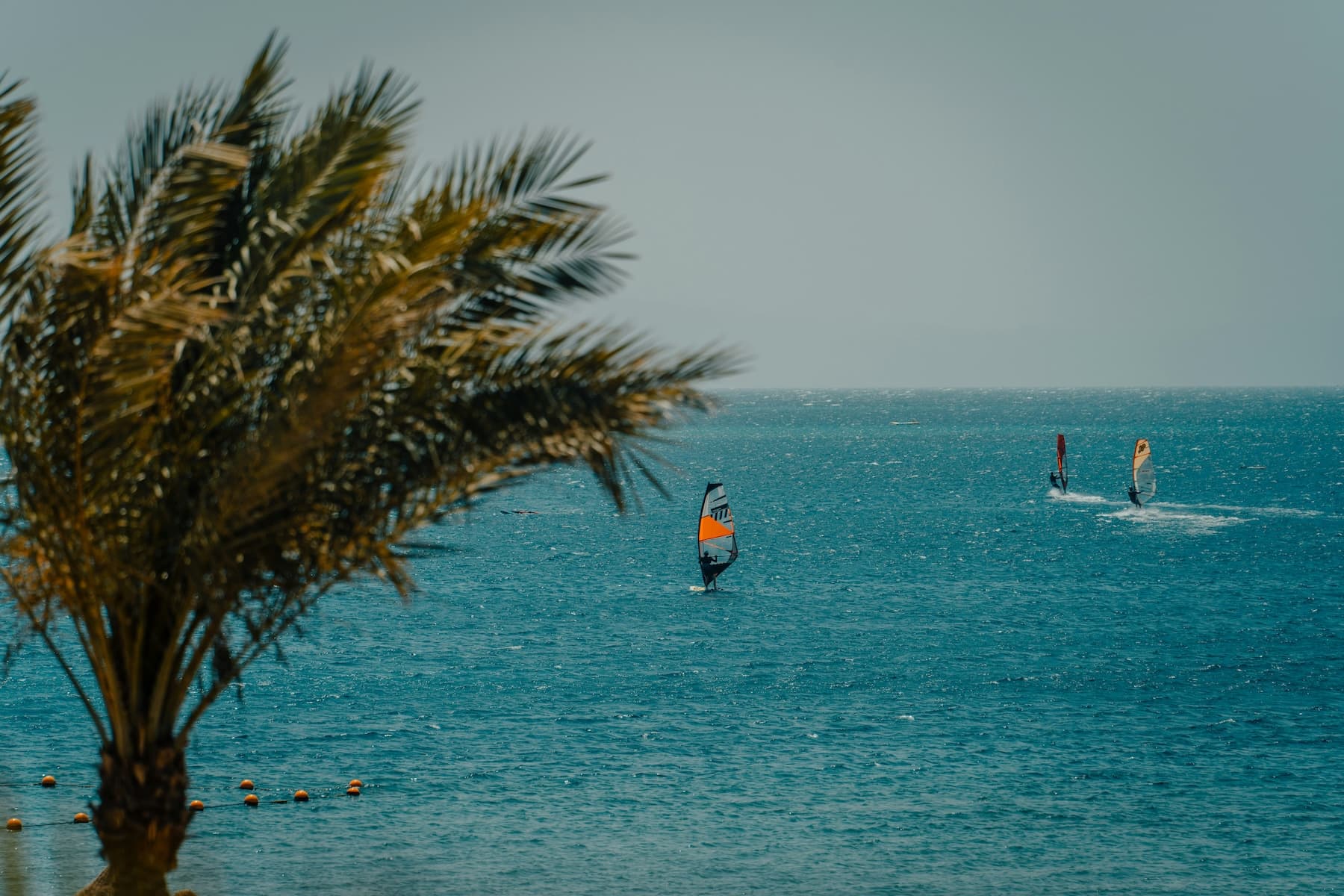
The Egyptian Red Sea is what you book when you want wind you can count on. A long, mountain-backed desert coast funnels a steady northerly down the sea for most of the year, the water is warm and the lagoons are flat, and the whole place is set up for windsurfers who would rather sail than wait. El Gouna, a purpose-built lagoon town just north of Hurghada, sits right at the centre of it.
The wind: a desert thermal you can rely on
The Red Sea's prevailing wind is a north to northwest airflow that runs straight down the length of the sea, squeezed and reinforced by the mountains on either side. In the warm half of the year a daily thermal stacks on top of it, so the wind tends to build through the morning and blow firm and side-shore all afternoon. Figure on 15–28 knots on a typical spring or summer day, steady rather than gusty, and side-onshore at most of the launches, which is about as safe and as friendly as strong wind gets. It is the kind of forecast that makes a week of back-to-back sessions realistic rather than lucky.
When to go
The coast works all year, but the wind has a clear season:
- April to September is the windy, warm peak. The thermal is at its strongest and most regular, the water is bath-warm, and most days deliver a long afternoon on the water.
- October and March are reliable shoulder months with plenty of wind and smaller crowds.
- December to February is the quieter winter. The thermal eases, calmer days creep in and you will want more rubber, but the sun still shines and the prices drop.
Water runs from around 22°C in winter to 27–28°C at the height of summer, so most of the year is boardshorts or a shorty, with a 3/2 for the cooler months.
Which launch
The wind is generous up and down the coast; the launches differ in water state and feel:
- El Gouna is the all-rounder. Shallow, flat lagoons inside the reef are ideal for learning and freestyle, while the open water beyond serves up bump-and-jump when you want to push. Centres, storage and downwind shuttles make a kit-light trip easy.
- Mangroovy (Hurghada) is the busy beach just south, cross-onshore, with a little wave peeling on the reef on bigger days.
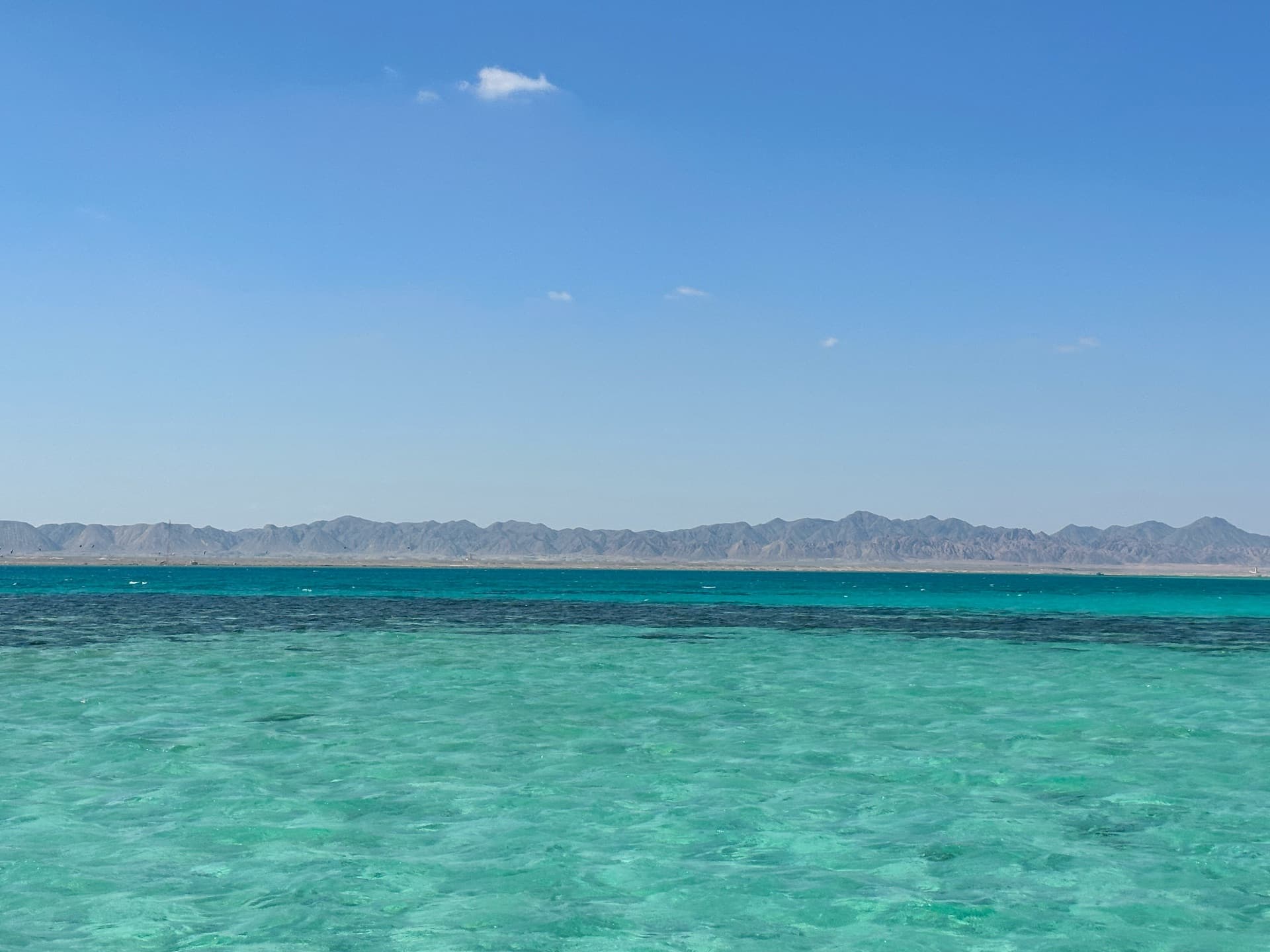
- Soma Bay is a vast, shallow, turquoise lagoon backed by a reef, a brilliant place to progress in flat water with deeper water and a wave on tap nearby.
- Safaga is the speed and slalom address: flatter water, often a notch stronger, and a long pedigree of hosting racing.
- Further south, Marsa Alam and Hamata trade the resort bustle for quieter, wilder lagoons.
Before you go
Fly into Hurghada (around 25 minutes from El Gouna) or Marsa Alam for the southern spots. Almost everything runs on an all-inclusive resort model, so rental, storage and lessons are easy to arrange on arrival and you can travel light. Centres run downwind safaris along the lagoons when the thermal is firing. For most riders the wind sits squarely in the freeride bracket; a 5.0 to 5.8 covers a lot of afternoons, with something bigger for the lighter mornings. If you want the exact call by weight and wind, the windsurf sail-size guide has it.
The verdict: target April to September for the strongest, most dependable thermal, and choose your launch by how much flat water you want under your board. Before you book, watch the live El Gouna forecast. When the north wind stacks up through the afternoon, that is your session.