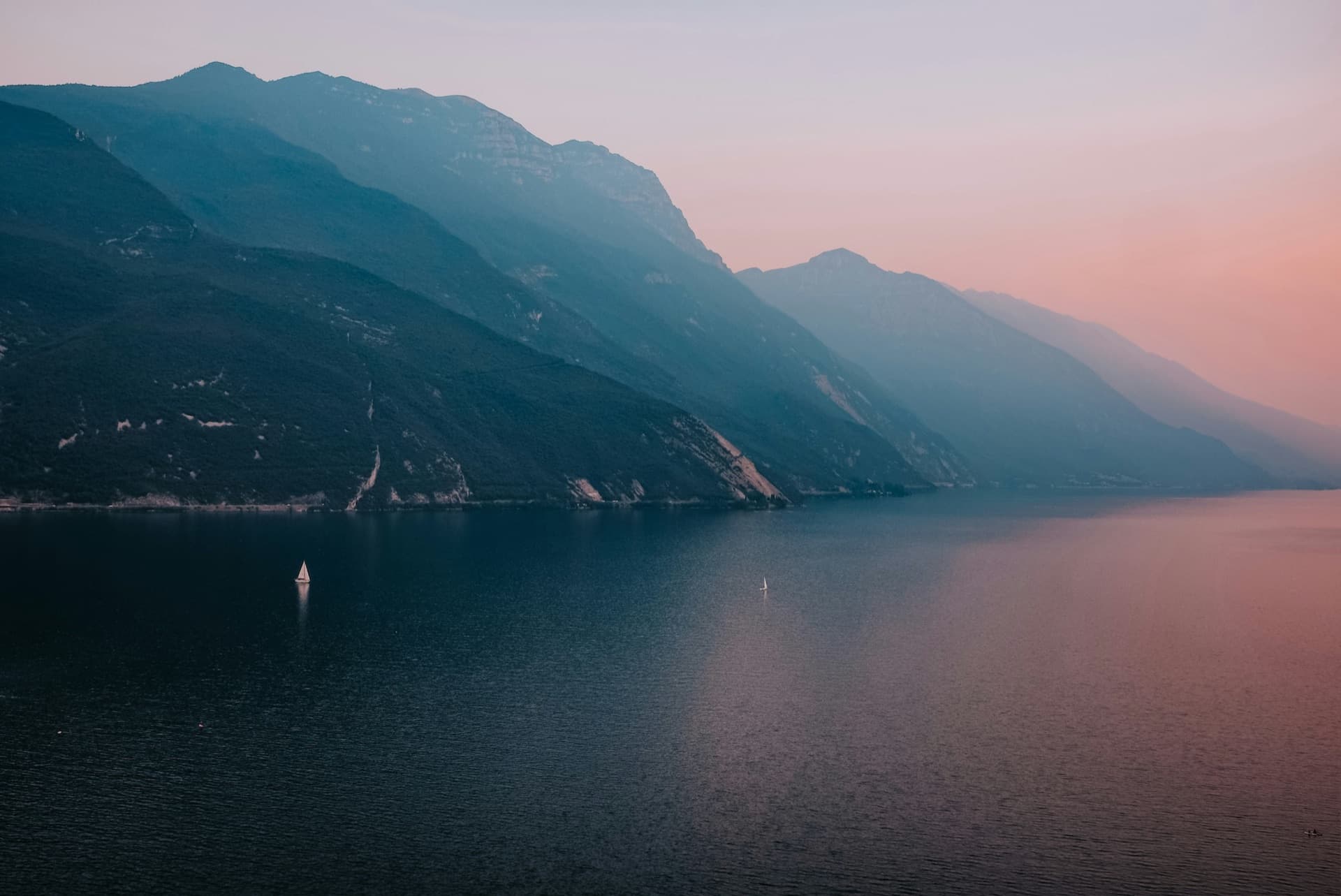
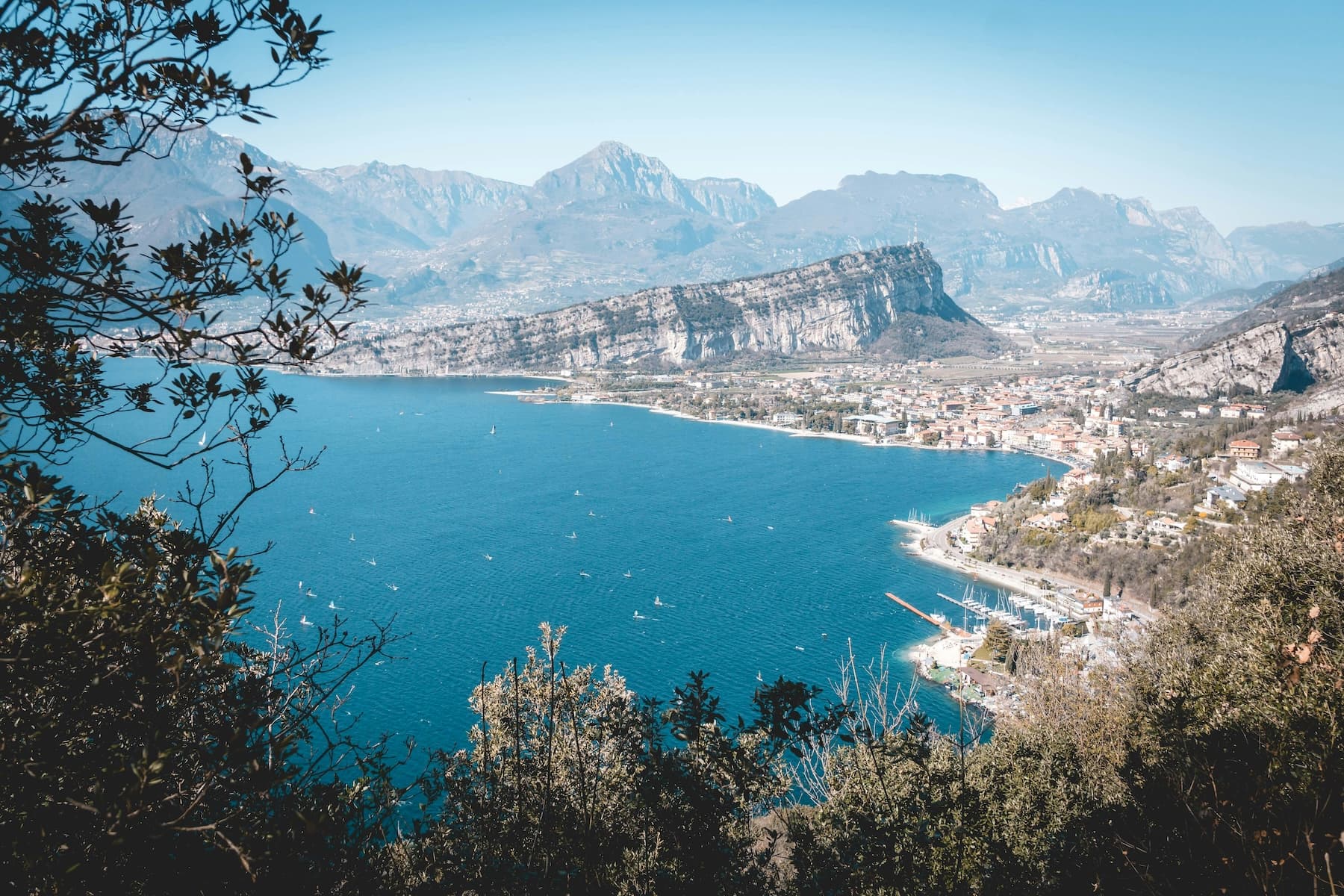
Lake Garda is the largest lake in Italy, but the part windsurfers care about is the narrow northern arm, where the water pinches between sheer Alpine walls above Torbole and Riva del Garda. Those mountains do something rare: they turn a mountain lake into one of the most dependable thermal-wind venues in Europe. Two winds blow here on almost every fair-weather day in summer, on a timetable you can set your watch by.
The two winds: Peler and Ora
Garda's magic is its daily rhythm.
Peler (some call it Vento or Suer) is the northerly. It is a cool drainage wind that pours down the Sarca valley overnight and blows hardest from dawn until mid-morning, strongest at the top of the lake around Riva and Torbole. Expect 15–25 knots on a good morning, flatter water near the launch and building chop as you head out. It is the wind for early risers, and for anyone who likes a powered-up session before breakfast.
Ora is the southerly, and it is the reason Garda is famous. It is a pure thermal: as the southern plains heat through the day, air is drawn up the lake from the south, filling in around midday and blowing steadily into the early evening. It is friendlier than the Peler, usually 12–22 knots, remarkably consistent in high summer, and it arrives like clockwork. For an intermediate looking to rack up clean freeride hours, there is little better on the continent.
Learning to ride both, the Peler before lunch and the Ora after, is how regulars get two sessions out of a single day.
When to go
Garda's thermals run with the sun, so the season tracks the warm months:
- May to September is prime. The Ora is at its most reliable through July and August, with warm air, long days and a near-daily afternoon session.
- April and October are quieter shoulder months: the Ora is less guaranteed, the Peler still delivers, and the crowds thin out.
- Winter is for sightseeing, not sailing. The thermals shut down, and the cold northerlies that do blow are for the hardy only.
Remember this is an Alpine lake, not the Med. Water sits around 11°C in spring and climbs to roughly 22–24°C by late summer, so pack a wetsuit for the shoulder seasons and save the boardshorts or shorty for the peak.
Which launch
The wind shifts character around the lake, so where you rig matters:
- Torbole is the windsurf capital of the lake, sitting right where the Ora hits cleanest. It is the busy, buzzing heart of the scene, with schools, rentals and a launch built for the afternoon thermal.
- Riva del Garda is around the corner at the very top, the best place to catch the morning Peler and a little more space.
- Malcesine sits on the east shore under the bulk of Monte Baldo. The Ora funnels through beautifully here, though the mountain makes it gustier, and the backdrop is hard to beat.
- Limone sul Garda on the west shore and Campione del Garda, wedged between cliffs, both accelerate the wind and reward riders who already know what they are doing.
Before you go
Fly into Verona (about an hour away and usually cheapest), or Bergamo, Milan, Venice or Innsbruck if the fares work better, then rent a car: the good launches are spread along fifteen kilometres of shoreline and the wind is not the same at all of them. Most riders base themselves in Torbole or Riva and bring or rent freeride kit; the Ora rarely asks for anything smaller than your everyday quiver. If you are still sizing your rig, our windsurf sail-size guide does the maths by wind and weight.
The verdict: come between May and September, sail the Peler at dawn and the Ora in the afternoon, and you will understand why generations of windsurfers treat Garda as home water. Before you pack, watch the live Torbole forecast and look for the southerly filling in after midday. That is the Ora calling.