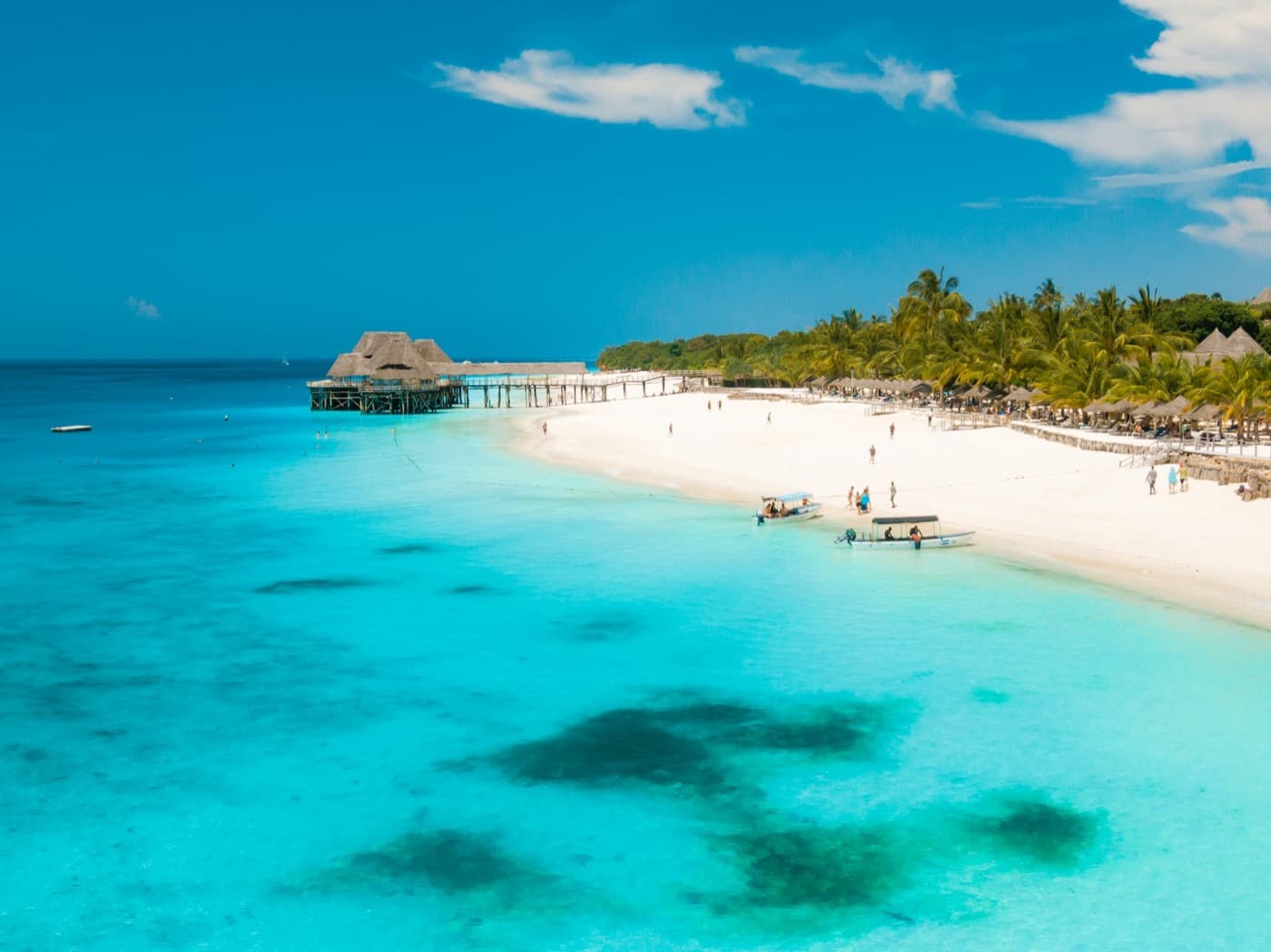
Zanzibar packs almost everything a kiter wants into one beach. The island's kite heart is Paje, a wide ribbon of white sand on the south-east coast where a shallow turquoise lagoon fills and empties with the tide. Add two dependable trade-wind seasons, water warm enough to ride in boardshorts, and a village stuffed with schools, beach bars and yoga decks, and you have one of the most popular kite-travel destinations on the planet.
The wind: Kaskazi and Kusi
Paje runs on two monsoon trade winds that bracket the year. The Kusi is the south-easterly that blows through the austral winter, roughly June to September. It is the stronger and more reliable of the two, dry and steady, and it is what makes that stretch the peak season. The Kaskazi is the north-easterly that arrives over the warmer months, roughly December to March: lighter and a touch less consistent, but still very rideable and gloriously hot.
Both blow side to side-onshore across the lagoon at Paje, which is exactly the direction you want for safety and for downwinders. A typical day sits in the 15 to 25 knot range, classic 9 and 12 metre territory, with the Kusi pushing harder on its best days.
The lagoon, and the tide
The defining feature of Paje is the tide. At low to mid water the lagoon drains into an enormous, waist-deep, butter-flat playground that stretches for hundreds of metres, ideal for first lessons, freestyle and foiling with nothing to fear in a fall. As the tide pushes in, the water deepens and the reef edge wakes up, giving the more advanced something with shape to play on. Because of this, sessions here follow the tide chart, not the clock, and a school's lesson times shift day to day with the water.
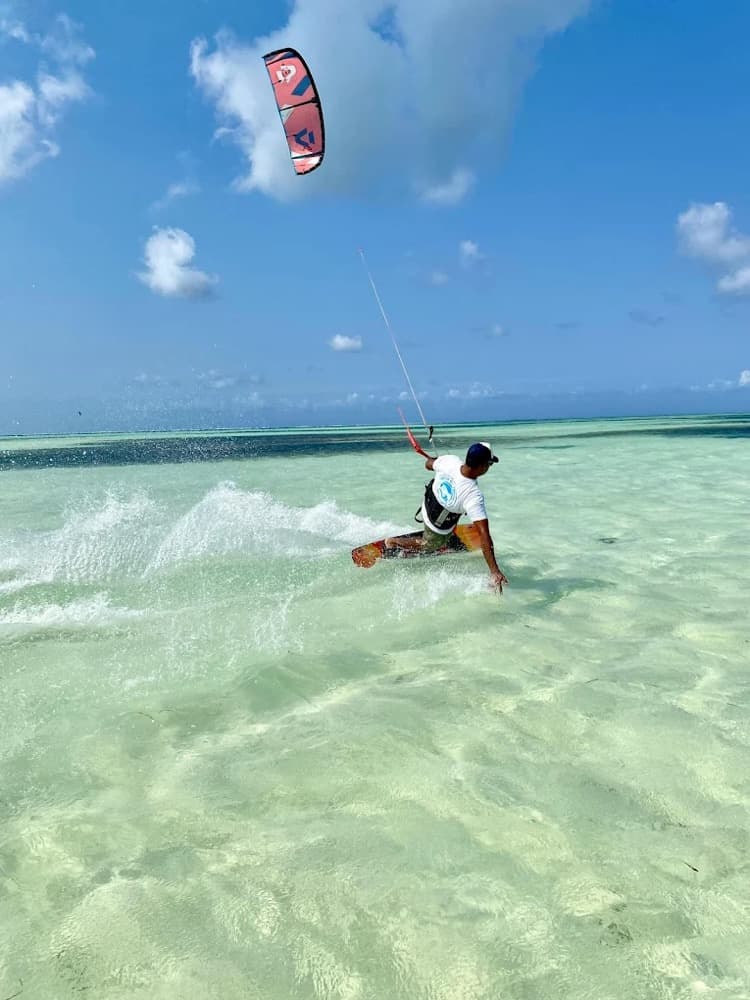
The flip side of a reef lagoon is the bottom. Patches of sea grass, coral and the odd sea urchin mean a pair of reef boots is worth packing, and at the lowest tides the inside can get too shallow to ride in places. None of it is a dealbreaker, it is simply part of reading the day.
When to go
The Kusi season, June to September, is the safe bet: the strongest, most consistent wind, dry skies, and the busiest, liveliest version of the village. The Kaskazi window, December to March, is the warm-and-mellow alternative and a genuine winter-sun escape from the northern cold, with lighter wind better suited to bigger kites and foils. The shoulder months around April to May and October to November bring the rains and the least reliable wind, so they are the ones to avoid. The water stays a bath-like 26 to 29°C all year, so you ride without a wetsuit whenever you come.
Before you go
Fly into Zanzibar (Abeid Amani Karume International), usually connecting through Dar es Salaam, Nairobi, Addis Ababa or a Gulf hub, then it is about an hour by road down to Paje. Base yourself right in the village so you can walk to the water and ride around the tide rather than drive to it. Bring a tide-aware mindset, reef boots, and a mid-to-large quiver: a 9 and a 12 cover most days, with a 7 for the windiest Kusi afternoons.
If you are still learning, Paje is one of the best classrooms in the world, and the kite schools in Zanzibar line the beach with rescue cover on the lagoon. For where to stay within walking distance of the launch, see our pick of Zanzibar kite houses. And before you book, watch the live Paje forecast to see which trade wind is filling in.