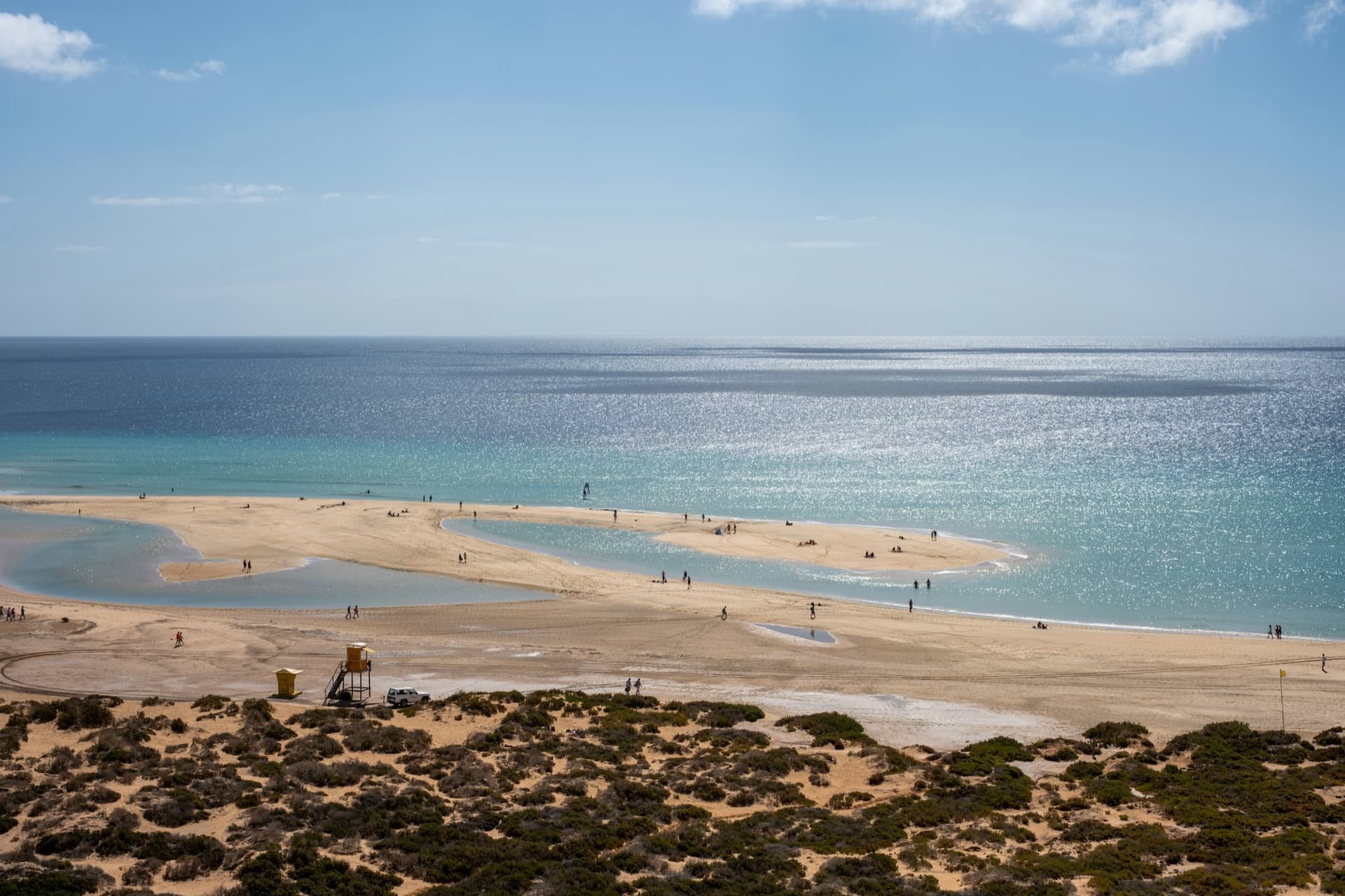
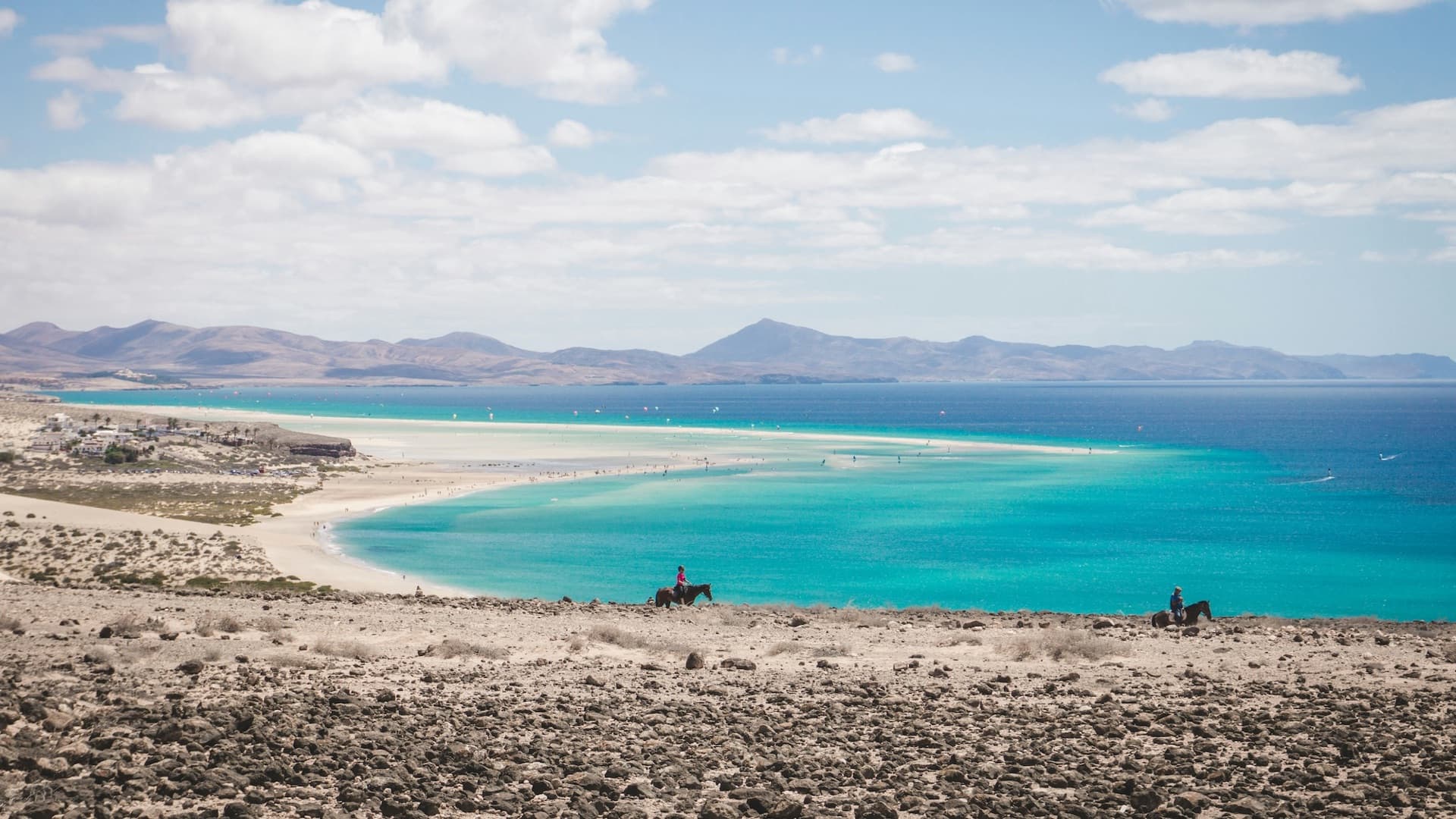
Fuerteventura is the windiest of the Canary Islands, a long, low desert island parked in the path of the Atlantic trade winds just off the Moroccan coast. Nowhere captures that better than Sotavento, a vast, shallow lagoon on the island's sheltered southeast shore that fills and empties with the tide and turns, on a windy afternoon, into the closest thing windsurfing has to a perfect playground. It is no accident that the World Cup has come here for decades.
The wind: trades you can bank on
Fuerteventura sits right in the belt of the northeast trade winds, the alisios, which blow off the Atlantic for most of the year. As they wrap around the mountainous Jandía peninsula in the south they accelerate and pick up a thermal kick, so by early afternoon the southeast coast is reliably powered up. Expect 20–30 knots on a typical summer afternoon, cross-onshore at Sotavento, which is about as safe a strong-wind direction as you could ask for: if anything goes wrong, the wind pushes you back towards the beach. It is steady, dependable trade wind, the sort that fills in day after day rather than teasing you.
When to go
The trades run all year, but they have a clear peak:
- May to September is the windy heart of the season, when the alisios are strongest and most consistent and the lagoon fires almost daily.
- October and April are reliable shoulder months with plenty of wind and fewer people.
- Winter still delivers on a good frontal setup and stays far milder than mainland Europe, which is exactly why the island is a popular winter-sun escape.
One surprise catches people out: the water is cooler than the latitude suggests, held down by the Canary current at around 18°C in winter and 22–23°C in late summer. Pack a shorty or a 3/2 for most trips.
Which launch
The island splits into two windsurf scenes, north and south:
- Sotavento is the headline: a huge, shallow lagoon behind a sandbar that goes flat and waist-deep at low tide, ideal for freestyle, speed and nervous first steps, with open-ocean bump-and-jump beyond the bar when you want more.
- Risco del Paso, at the lagoon's mouth, mixes flat water inside with swell on the outside, a favourite for freeriders who want a bit of everything.
- Up north, Flag Beach near Corralejo is the other hub: cross-onshore, school-friendly and a brilliant bump-and-jump beach when the trades are pumping.
- Corralejo Bay offers flatter, more protected water close to town for the early days of a trip.
Before you go
Fly into Fuerteventura (FUE) and rent a car: the good launches sit at opposite ends of a long island, and the wind is not the same north and south. The southern resorts of Costa Calma and Jandía put you on the doorstep of Sotavento, while Corralejo anchors the north. Centres at both ends rent and store kit, so you can travel light. Check the tide for the lagoon, since it transforms between low and high water. The trades usually sit in the freeride range, with a 5.0 to 5.8 covering most afternoons and smaller for the windiest days; the windsurf sail-size guide has the exact call by weight and wind.
The verdict: come between May and September, base yourself near Sotavento for the lagoon or Corralejo for the bump-and-jump, and let the trades do the rest. Before you book, watch the live Sotavento forecast and look for the northeasterly stacking up through the afternoon.