Europe's great kite destinations almost all run on a named wind. These are not just local nicknames: each is a specific airstream, shaped by mountains, pressure systems and the sea, that turns up reliably enough to plan a whole trip around. Learn the names and a map of European kitesurfing starts to make sense.
Levante and Poniente: the Strait of Gibraltar
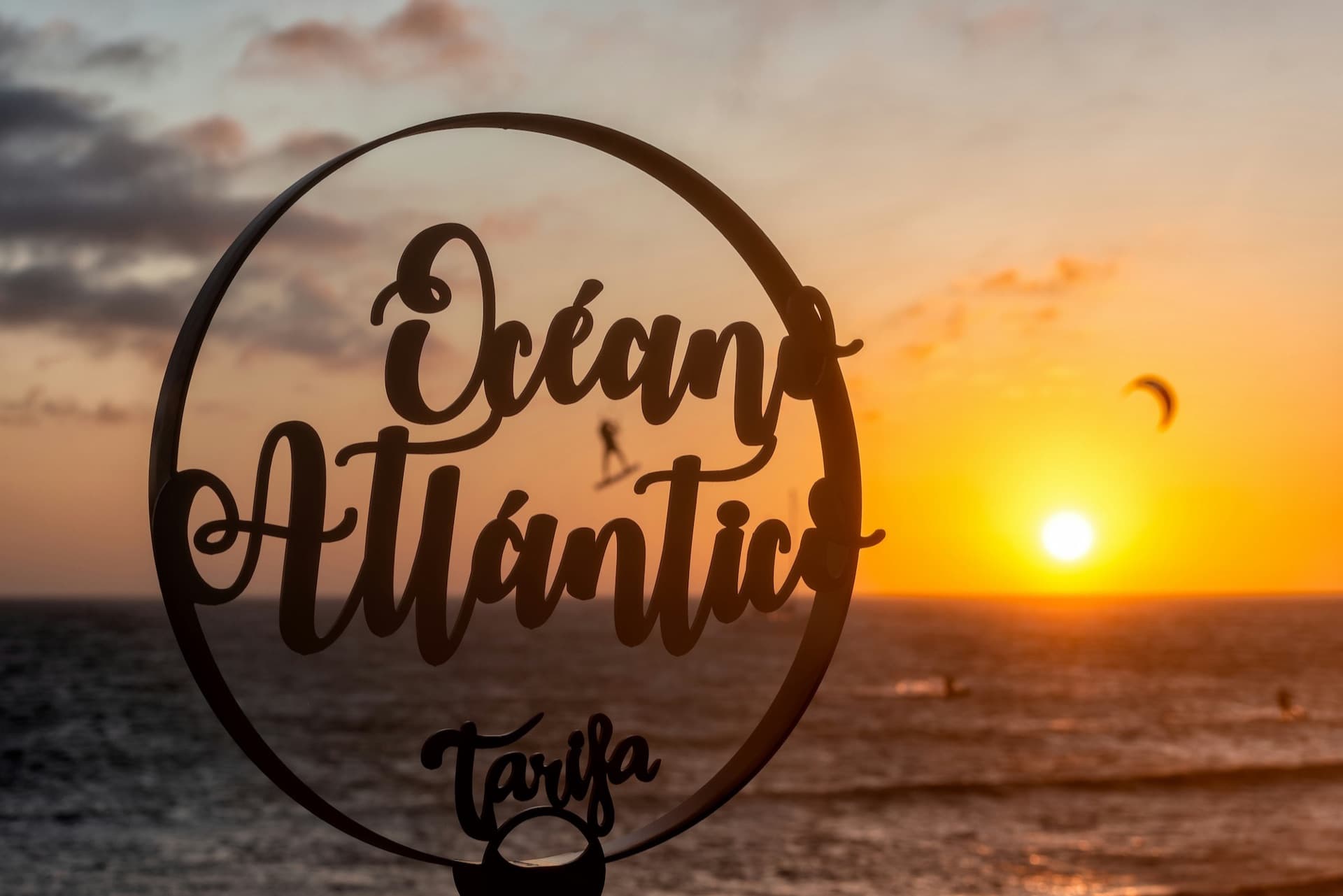
At Tarifa, everything comes down to two winds. The Levante is the easterly: hot and dry off the Mediterranean and the Sahara, squeezed and accelerated through the 14 km gap of the Strait until it reaches the coast strong, gusty and relentless. The Poniente is its westerly opposite, cleaner and steadier off the Atlantic. Both are a venturi effect, the wind speeding up as the terrain funnels it, which is what makes the Strait the most consistently windy stretch in Europe. Full trip notes are in the Tarifa guide.
The Meltemi: the Aegean
From roughly mid-June to mid-September a dry northerly sweeps down across the Greek islands: the Meltemi. It is an etesian wind, driven by a pressure gradient between high pressure over the Balkans and low pressure over Turkey, and it accelerates through the channels between the islands. Spots like Mikri Vigla on Naxos can hold 25 to 40 knots for days at a time. It is what turns Greece into a summer wind machine (see the Greece guide).
The Tramontane and Mistral: France and Sardinia
Two cold, dry northwesterlies pour off the European landmass into the Mediterranean. The Tramontane funnels between the Pyrenees and the Massif Central onto the Languedoc coast around Leucate. The Mistral does the same one valley east, down the Rhône and out across Provence, and reaches all the way to Porto Pollo in northern Sardinia after squeezing through the strait between Sardinia and Corsica. Both are strong, gusty, and famous for blowing for days at a stretch (more in the South of France and Sardinia guides).
The Alisios: the Atlantic trades
Out in the Canaries, around Sotavento on Fuerteventura, the wind is the Alisios, the northeasterly trade winds that flow down the African coast. They accelerate between the islands and are topped up by afternoon thermals, delivering wind on most days from spring through autumn. The same trade-wind belt powers Cape Verde and, further south, the famous downwinders of Brazil (see the Fuerteventura guide).
Why so many?
Notice the pattern: almost every one of these is the wind being accelerated, by terrain or a pressure difference (a venturi through a strait or a valley), or by a thermal pulling air off a hot landmass in summer. That is why the Mediterranean, which can look benign on a map, is one of the windiest playgrounds on earth between June and September. Pick the wind you want, then check it live before you book.