From November to March the European windsurf season goes quiet: the lakes turn cold, the Meltemi is long gone, and the good days are few and freezing. There are two ways to beat it. Chase latitude, and follow the trade winds south to places that stay warm and windy right through winter, the Canaries, Cape Verde, the Red Sea, the Caribbean. Or flip the hemisphere entirely, because when it is deep winter here it is high summer in South Africa. The six destinations below cover both routes, and every one pairs dependable wind with water you can sail in comfort, most of it warm enough for a shorty or boardshorts. Winter trades also tend to be steady rather than extreme, which makes this the ideal season to rack up freeride miles or shake off the rust. Size your quiver with the windsurf sail size guide before you pack, and lean slightly bigger than a summer Europe trip.
Sotavento, Fuerteventura
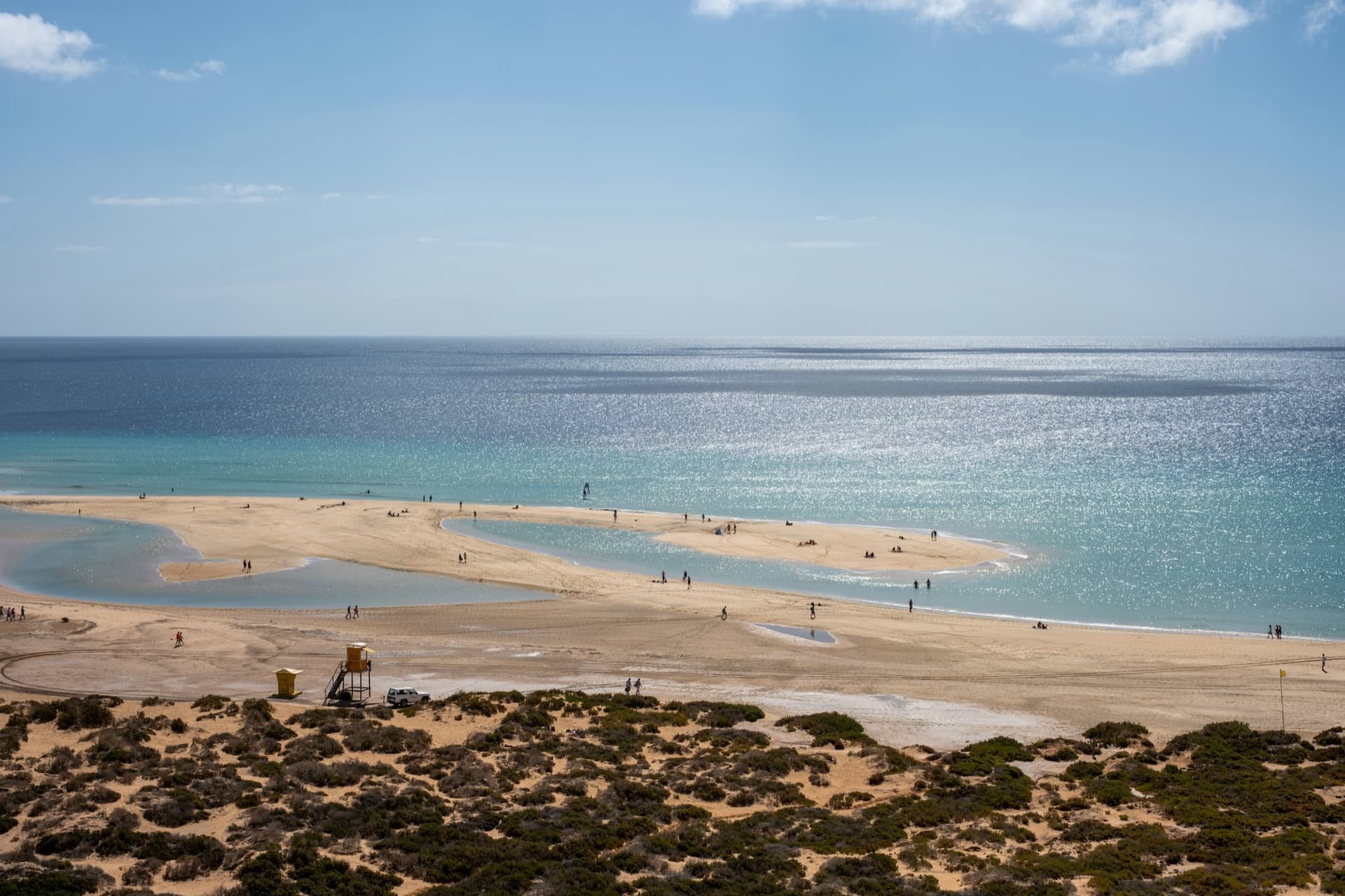
The short-haul answer. The Canary trades keep blowing through winter, a touch milder than in summer but reliable, and Sotavento's beach and lagoon work year-round under near-constant sun just a few hours from most European airports. There is a flat, waist-deep lagoon for freeride and freestyle at high tide and open water outside for more, plus schools and rental that stay open all season. The water is cool-ish for the latitude, so pack a shorty or a light steamer. See the Sotavento guide and the live forecast.
Sal, Cape Verde
For Cape Verde, winter is the season. The trade winds blow hardest from roughly November to June, so the European off-season is exactly when Sal comes alive: warm water, steady side-shore wind, flatwater and bump around Santa Maria, and world-class waves down the coast for when you progress. The islands sit far enough south to stay genuinely warm in January, and the pace is unhurried and Creole. It is a real winter jackpot for windsurfers who want both flat water and swell in one trip. Check the Santa Maria forecast and plan for the core trade months.
El Gouna, Egypt
The Red Sea is the classic winter-sun bolt-hole, and El Gouna is its most comfortable heart: sprawling flat lagoons, a steady thermally reinforced breeze, warm-enough water, and resorts and centres built around the sport. December and January deliver reliable freeride days under blue sky while Europe shivers, and the flat, shallow water suits easy cruising and freestyle alike. Non-sailing partners get a resort town of lagoons and restaurants to potter around. See the El Gouna guide and the live forecast.
Langebaan, South Africa
The hemisphere flip. When Europe is at its coldest, South Africa is deep in summer, and the Cape's southeaster fills Langebaan's huge, flat lagoon from November through February. It is warm, sunny, and protected, a beautiful freeride and beginner-friendly sheet of water an hour north of Cape Town, with the town's other summer wind and the winelands within easy reach. The lagoon's flat water and side-shore breeze make it a joy for cruising and speed. Check the Langebaan forecast and build it into a wider Cape trip.
Lac Bay, Bonaire
The Caribbean trades do not stop for winter, so Bonaire stays warm, sunny, and steady right through the European off-season. Lac Bay's shallow, flat lagoon is as forgiving as windsurf water gets, which makes it a rare winter spot that suits a rusty freerider and a total beginner equally, and the island's diving fills the lighter days. Expect dependable, moderate trade wind rather than big-air drama. Check the Lac Bay forecast and plan around the reliable December to August season.
Dahab, Egypt
A mellower, cheaper Red Sea option than the resort towns, Dahab pairs flat, shallow lagoons for freeride with the Lighthouse reef for more advanced sailing, all under winter sun. The wind is a touch less relentless than the Canaries in midwinter, but the warmth, the low prices, and the laid-back Bedouin-town scene of beach cafes and dive shops more than make up for it. It is an easy place to spend two slow weeks. Check the Dahab forecast and treat it as a relaxed sun-and-sail base.
How to choose
Shortest flight from Europe? Sotavento. The most wind through the winter months? Sal or El Gouna. Something completely different, in high summer? Langebaan. The gentlest, warmest water for a rusty return or a first trip? Lac Bay or Dahab. Because winter trades tend to be steady rather than savage, you can often pack a slightly bigger quiver than a summer Europe trip and still be happy. Check the sail sizes and the live forecast before you fly south, and you can leave the thick wetsuit at home.