Europe is a windsurfing continent because of its winds, and most of them have names. The Ora that pours up Lake Garda every afternoon, the Levante squeezing through the Strait of Gibraltar, the trade winds accelerating between the Canary Islands, the Tramontane funnelling out of the Pyrenees, the Meltemi that hammers the Aegean all summer: pick a spot wired to one of these systems and you can plan a trip months ahead around wind that arrives on schedule. The full picture is in the winds of Europe. What follows are six spots that turn those systems into world-class sailing, spanning glassy freeride lagoons, speed strips, and survival-grade wave. They also cover the full range of ability, so read each one's character before you book, and size your quiver to the forecast with our windsurf sail size guide. None of them is a secret, and that is the point: the schools, rental, and repair are as reliable as the wind.
Lake Garda, Italy
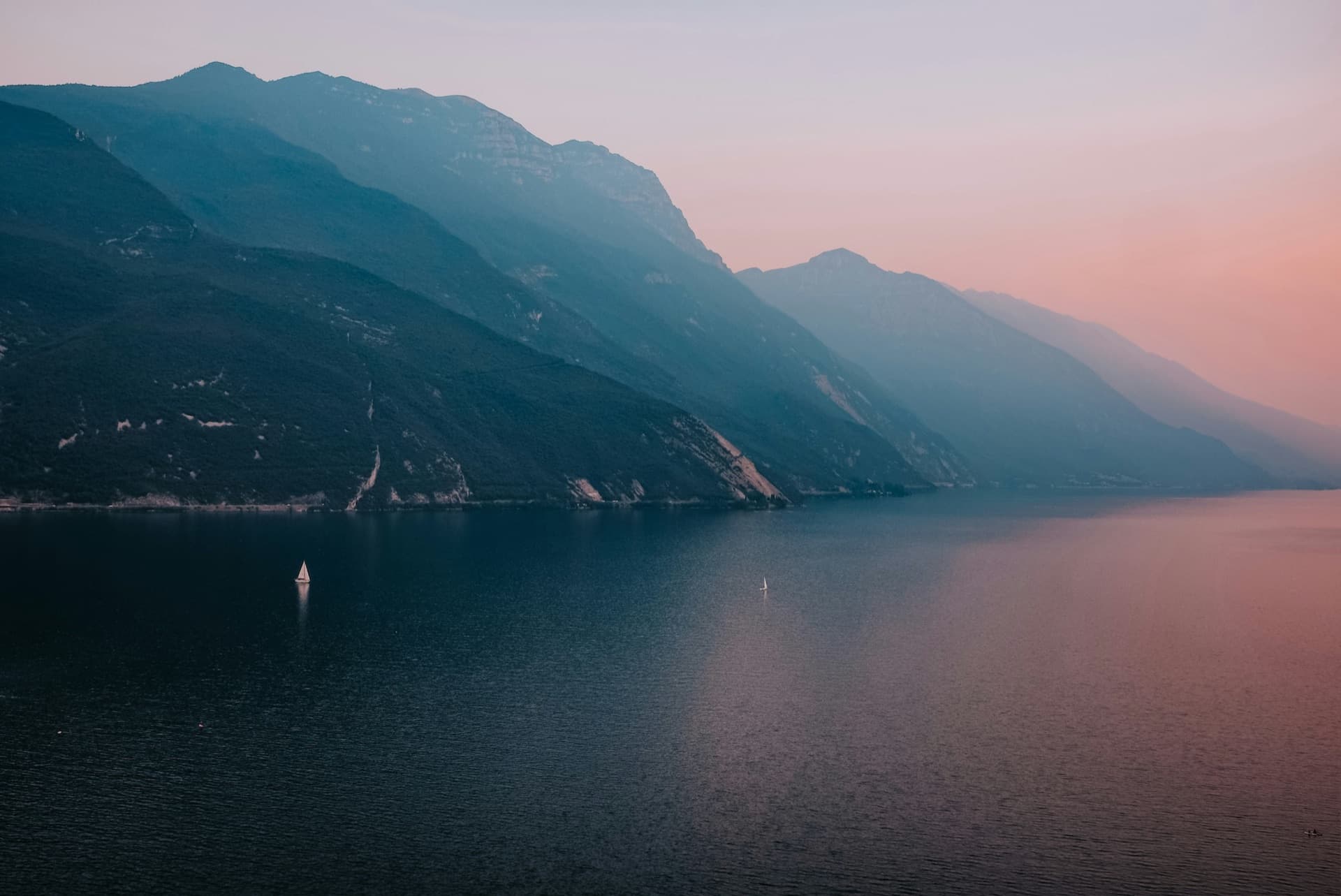
The most beautiful freeride classroom in the world. Garda runs on two daily thermals: the Peler blows strong from the north in the early morning, then the Ora answers from the south through the afternoon, a steady, warm, blue-water breeze of around 12 to 20 knots framed by near-vertical cliffs. Torbole and Riva at the northern tip are the epicentre, dependable from April to October and forgiving enough that you can sail here a week straight without a bad day. It is busy in summer for good reason. See the Lake Garda guide and the Torbole forecast.
Tarifa, Spain
Europe's wind capital, and its busiest windsurf town for good reason. Two opposing systems keep it blowing: the strong, gusty Levante from the east and the smoother, more manageable Poniente from the west, which between them fill the huge beaches of Los Lances and Valdevaqueros more days than not. It works nearly year-round with a summer peak, the shops and rental are the best-stocked in Europe, and the after-sail scene is a destination in itself. The wind can be powerful, so it rewards a confident intermediate upward. Check the Tarifa forecast and watch which of the two winds is due.
Sotavento, Fuerteventura
The Canary trades accelerate down the flank of Fuerteventura and land on Sotavento's enormous beach and tidal lagoon, which is exactly why the windsurfing World Cup has been decided here for decades. At high tide the lagoon becomes a flat, waist-deep freestyle and freeride paradise; the open beach outside serves stronger wind and swell for wave and bump. It blows most of the year, hardest from May to September, under reliable sun. The tide dictates the lagoon, so check the tables before you rig. See the Sotavento guide and the live forecast.
Pozo Izquierdo, Gran Canaria
The other end of the spectrum: Europe's windiest, most extreme wave-sailing arena. Through summer the acceleration-zone trades scream through Pozo Izquierdo at speeds that shrink your smallest sail, over a punchy shore-break wave, which is why it hosts the world tour's heaviest event each July. Expect 30 knots and up on a normal day. This is expert territory, a bucket-list test of nerve and gear rather than a cruise, and well worth watching before you sail it. Check the Pozo Izquierdo forecast and rig right down.
Leucate, France
The Tramontane accelerates between the Pyrenees and the Massif Central and pours onto the Languedoc coast, giving Leucate and neighbouring La Franqui well over a hundred windy days a year. There is a flat lagoon, the étang, for freeride and speed on one side and open sea for waves on the other, plus a deep French windsurf culture and the long-running Mondial du Vent event each spring. The Tramontane arrives cold, dry, and strong, often for days at a time once it settles in. Check the Leucate forecast and layer up when it fills in.
Karpathos, Greece
When the Meltemi switches on in summer, the Aegean becomes the most reliable strong-wind playground in Europe, and Afiartis on Karpathos is its showpiece: side-shore wind day after day over flat-to-bump water, with a dedicated wave beach nearby for the bigger days. Naxos, Rhodes, and Kos share the same engine if you want to island-hop a trip together. It is dry, sunny, and metronomic from roughly June to September, when many days run 25 knots plus. Check the Afiartis forecast and plan for the mid-summer peak.
How to choose
Learning, or logging happy freeride miles? Lake Garda, Sotavento's lagoon, or Karpathos. Chasing maximum wind and swell? Pozo Izquierdo, or Tarifa on a big Levante. Somewhere in between, with culture and history thrown in? Leucate. The rule across all of them is the same: the wind is named and scheduled, so plan the trip around the system, match your sails to the forecast, and check the live conditions the week before you travel so you arrive on a working forecast rather than a dead spell.